Magdalena Stückler (*1996/AT) lives and works in Vienna. She explores the space between socially
constructed opposites such as activity and passivity, excess and scarcity, presence and absence.
Her predominantly sculptural practice investigates the relationships between the human body,
objects, and architectural environments. In doing so, she addresses the social and economic
conditions of contemporary production and connects them with influences from fashion,
architecture, and textile craft.
She has exhibited her work at Salzburger Kunstverein, Krinzinger Schottenfeld, Laurenz Space and
Neuer Wiener Kunstverein. Since 2023, she has been a cofounder of Garage Show. After
graduating from the Fashion School Hetzendorf, she studied at the University of Applied Arts
Vienna in the departments of Photography and Sculpture & Space. She received the Fine Arts Grant
of the Province of Lower Austria in 2024 and the Start-Grant (bmwkms).
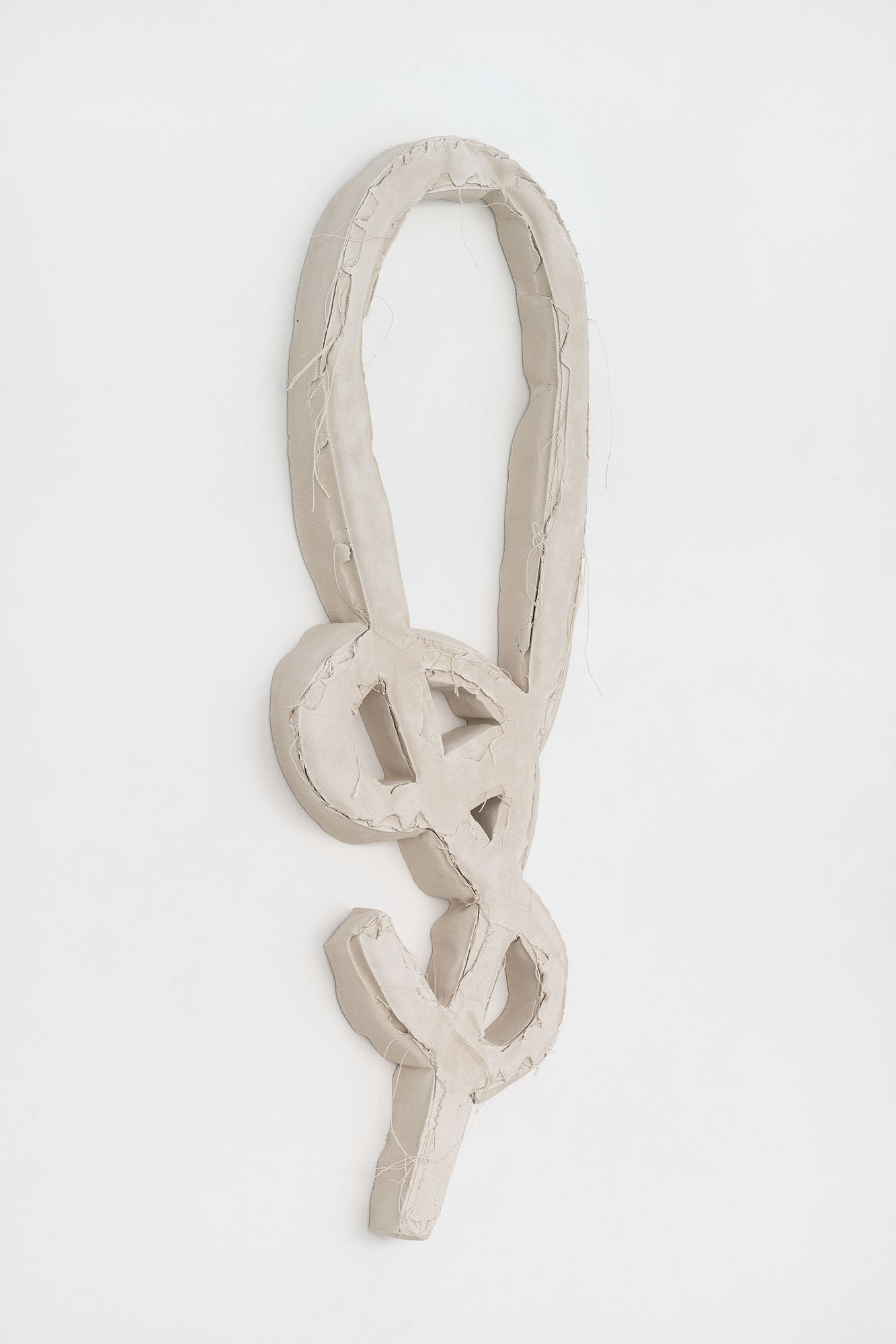
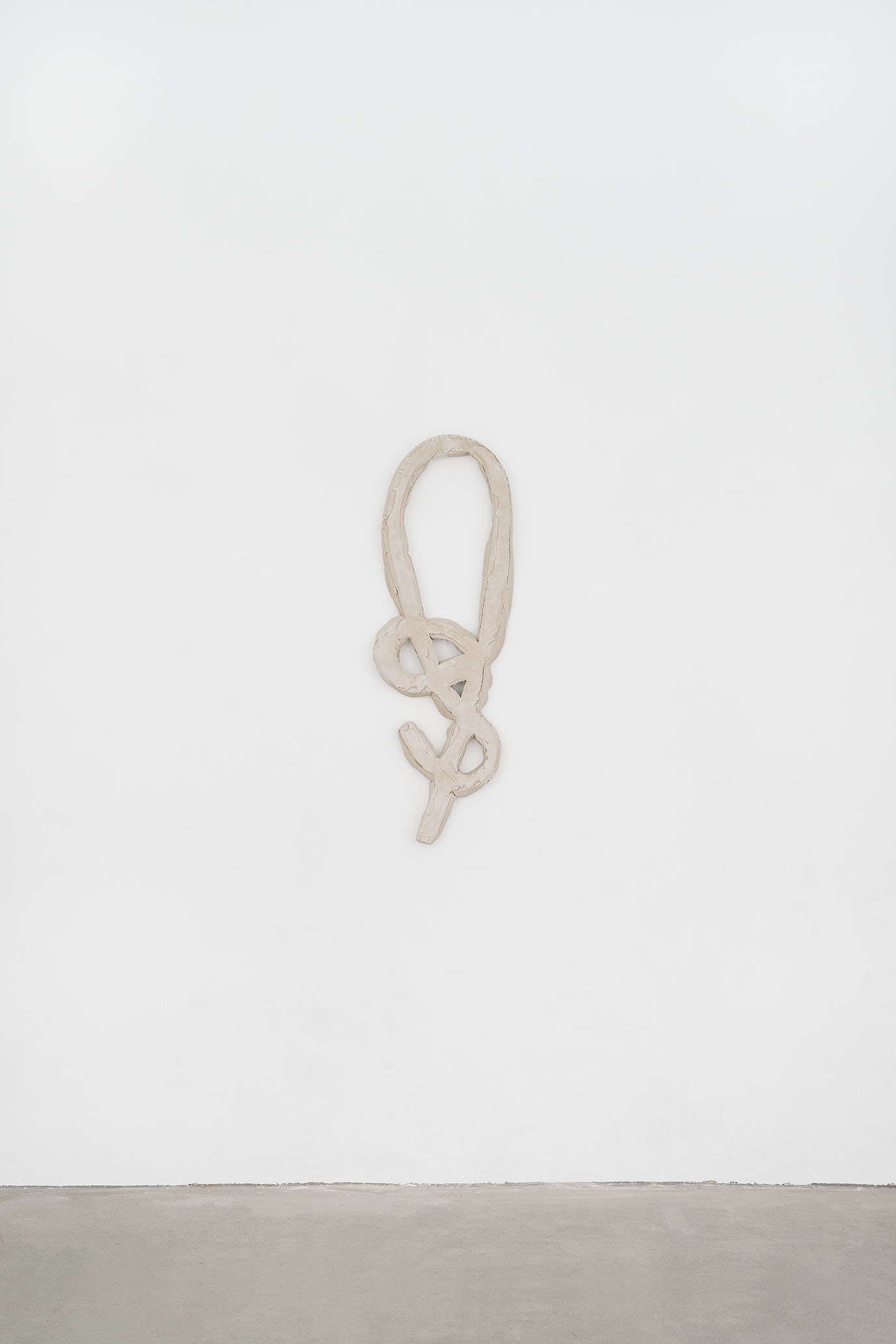
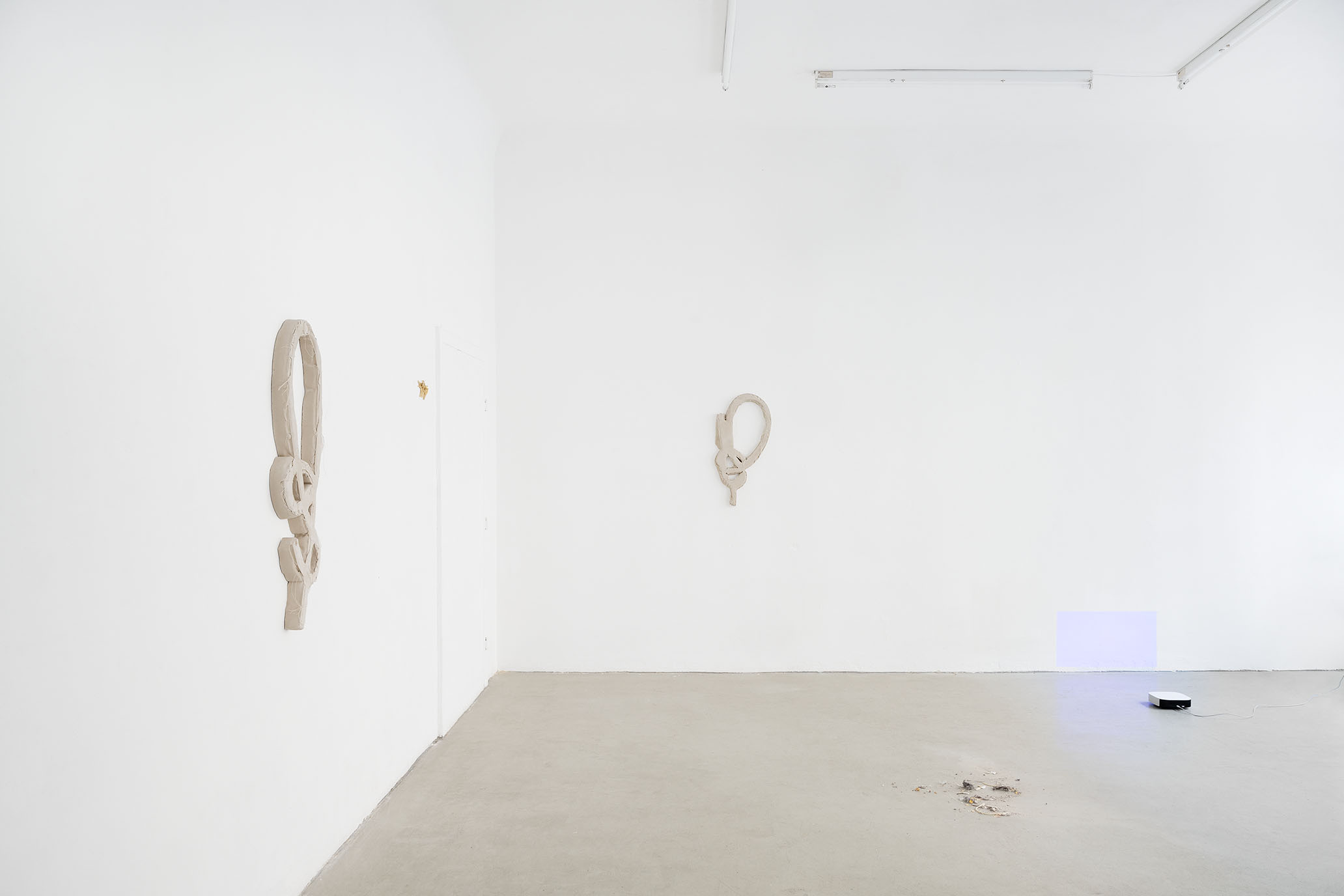
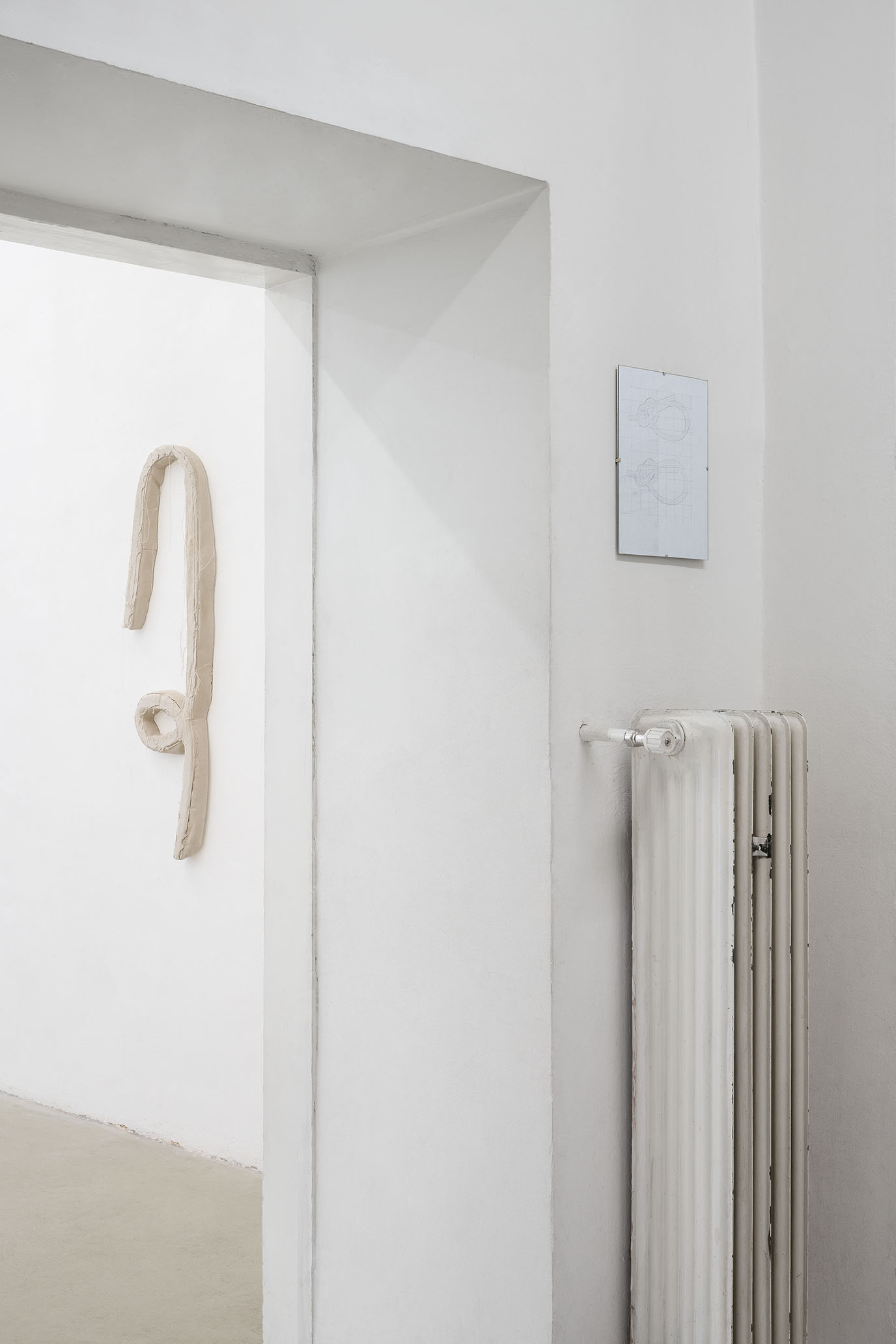
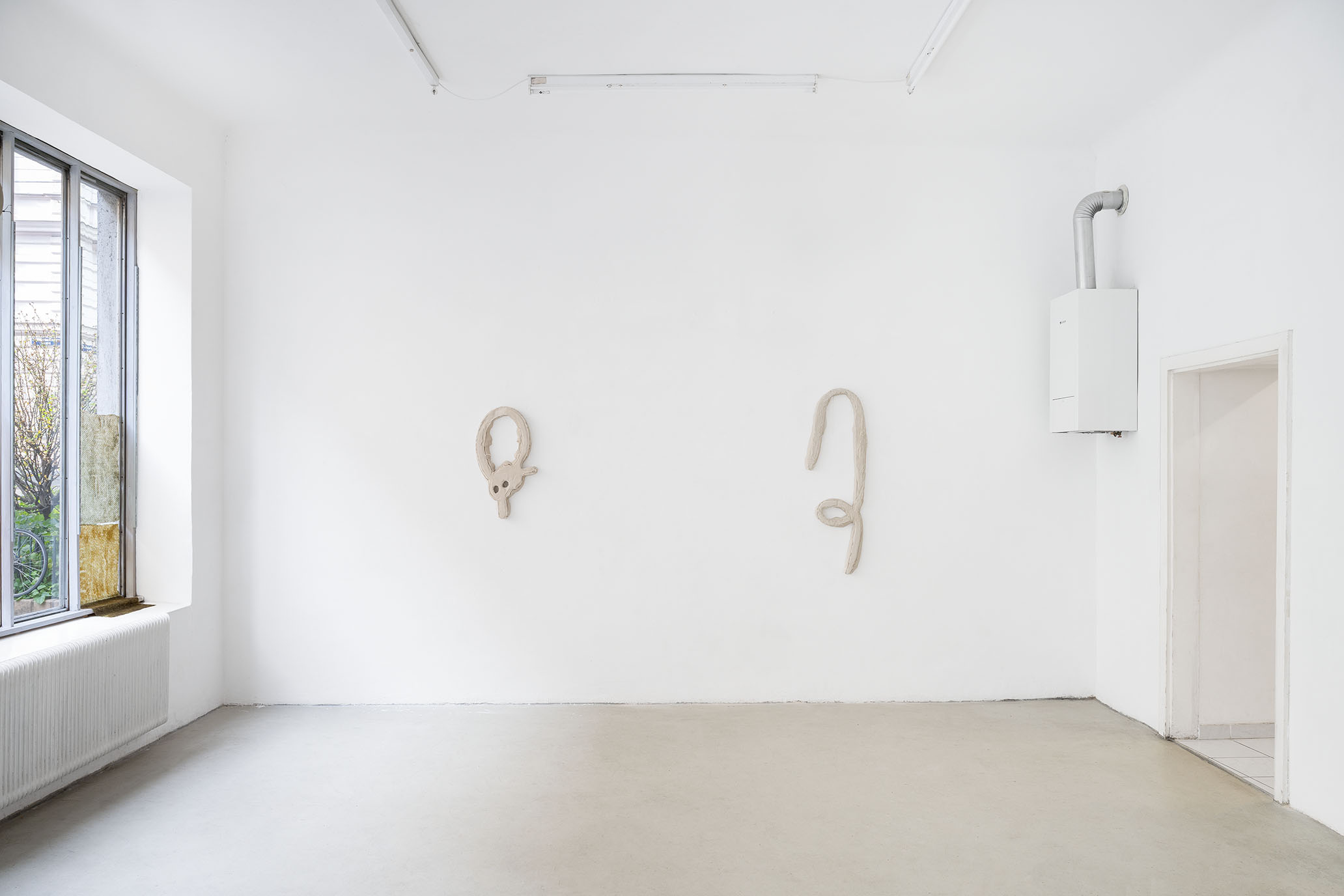
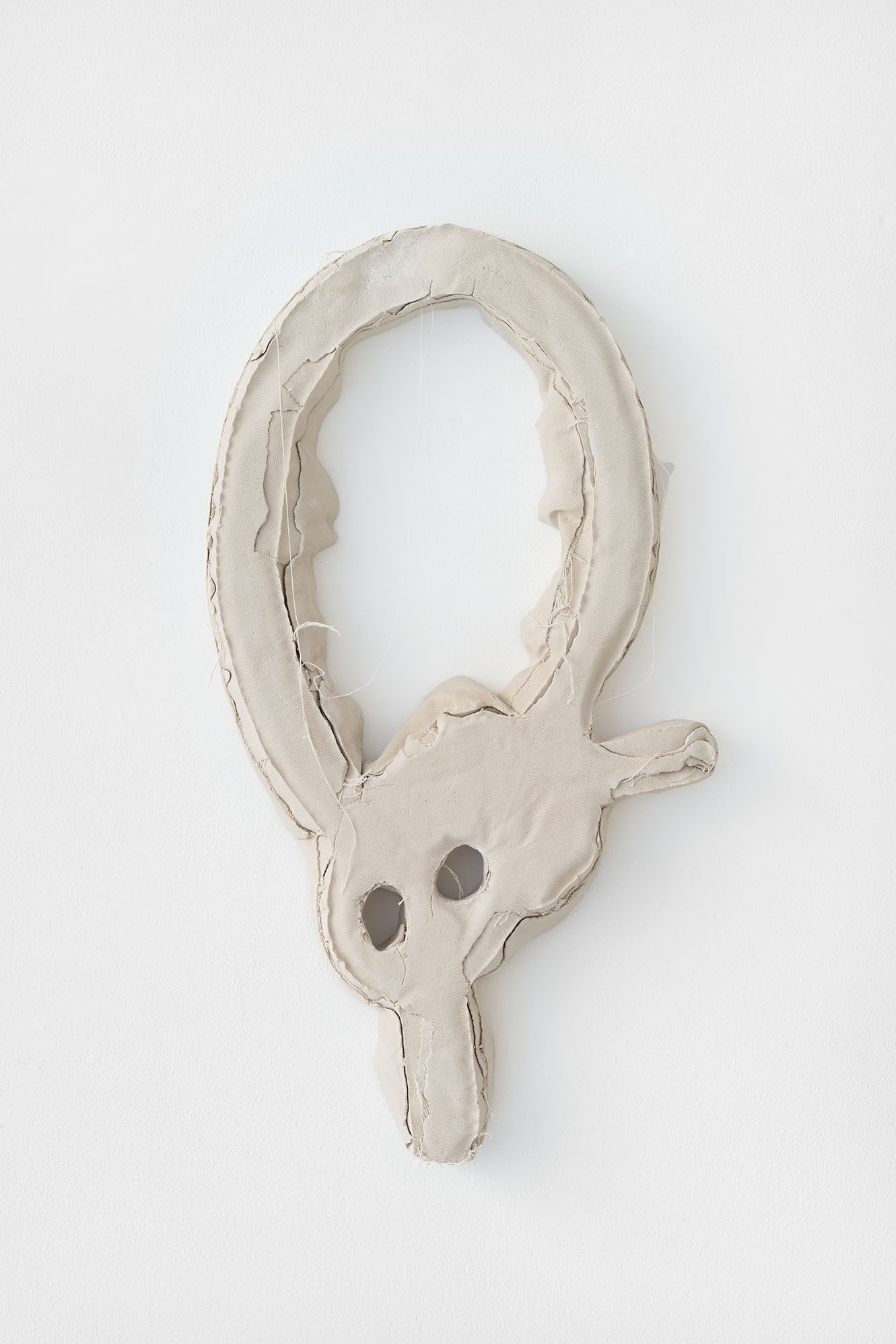
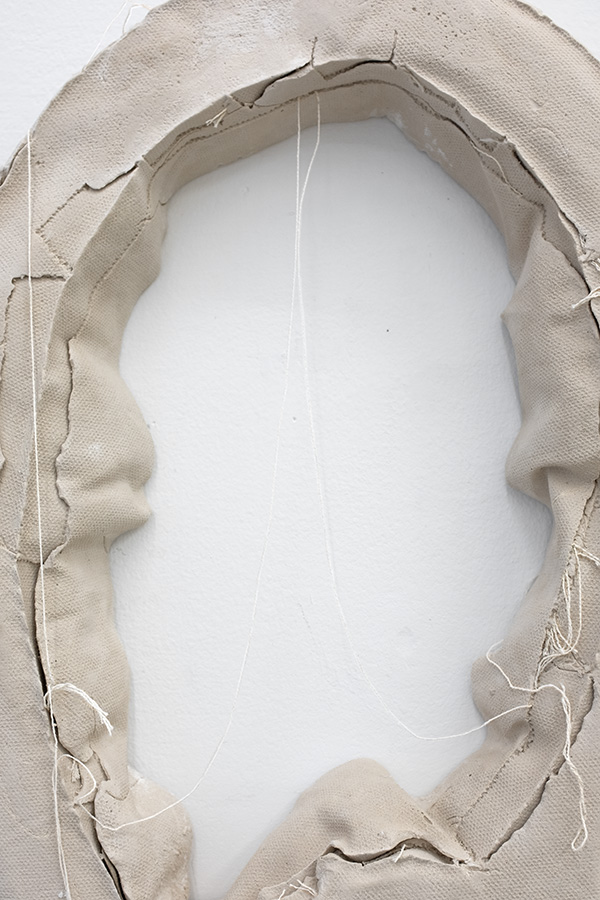
Documenation: Simon Veres
With works by VALIE EXPORT, Marica Fasoli, Kerstin von Gabain, Marcus Geiger, Sofia Goscinski, Trixi Groiss, G. Gutenberger, Lore Heumann, Annette Hinterwirth, Axel Huber, Olga Jakob, Xenia Lesniewski, Max Piva, Eva Schlegel, Ulrich Strothjohann, Magdalena Stückler, Walter Vopava.
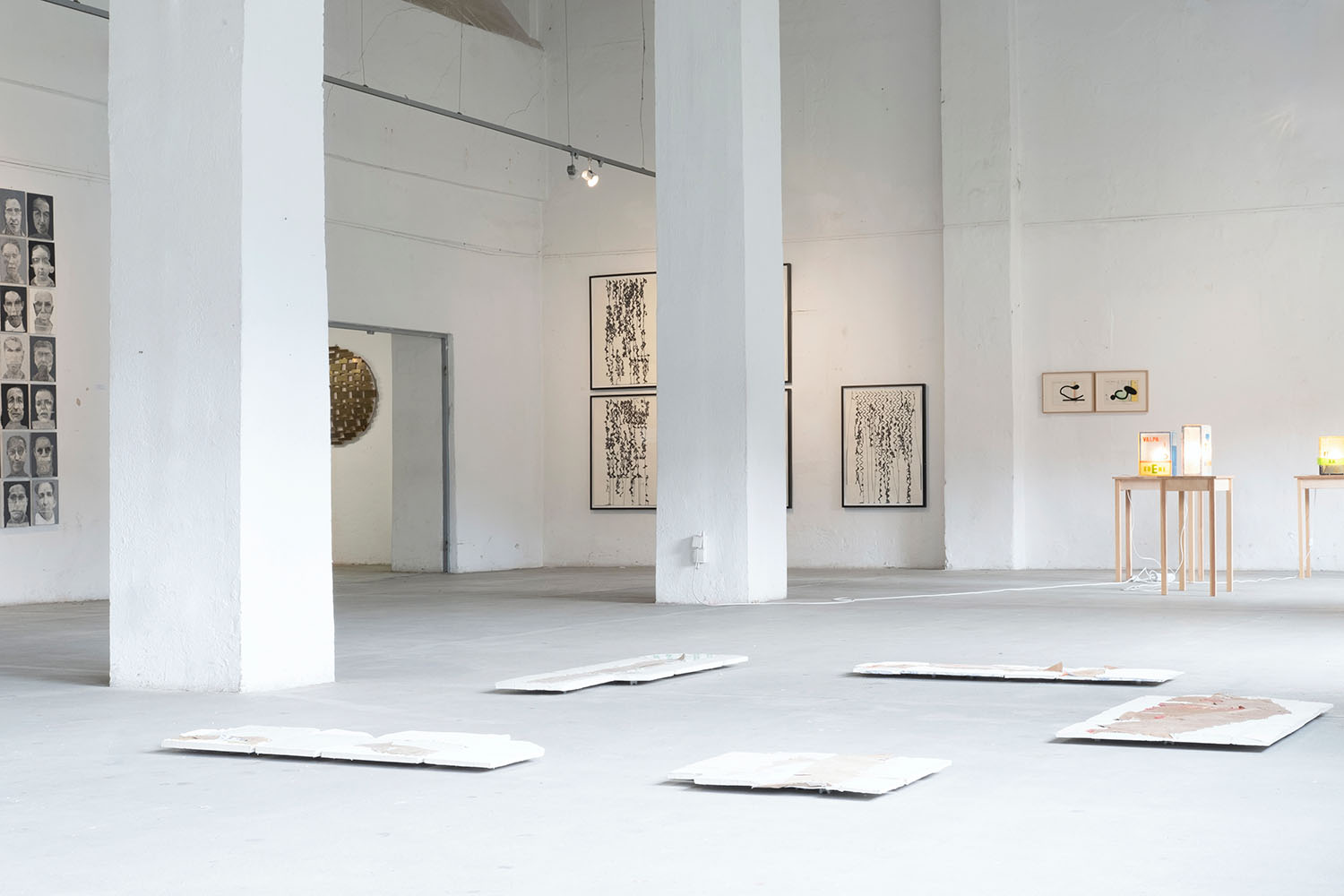
A collective exhibition by Gabriel Huth, Marlene Posch, Julian Siffert, Magdalena Stückler.
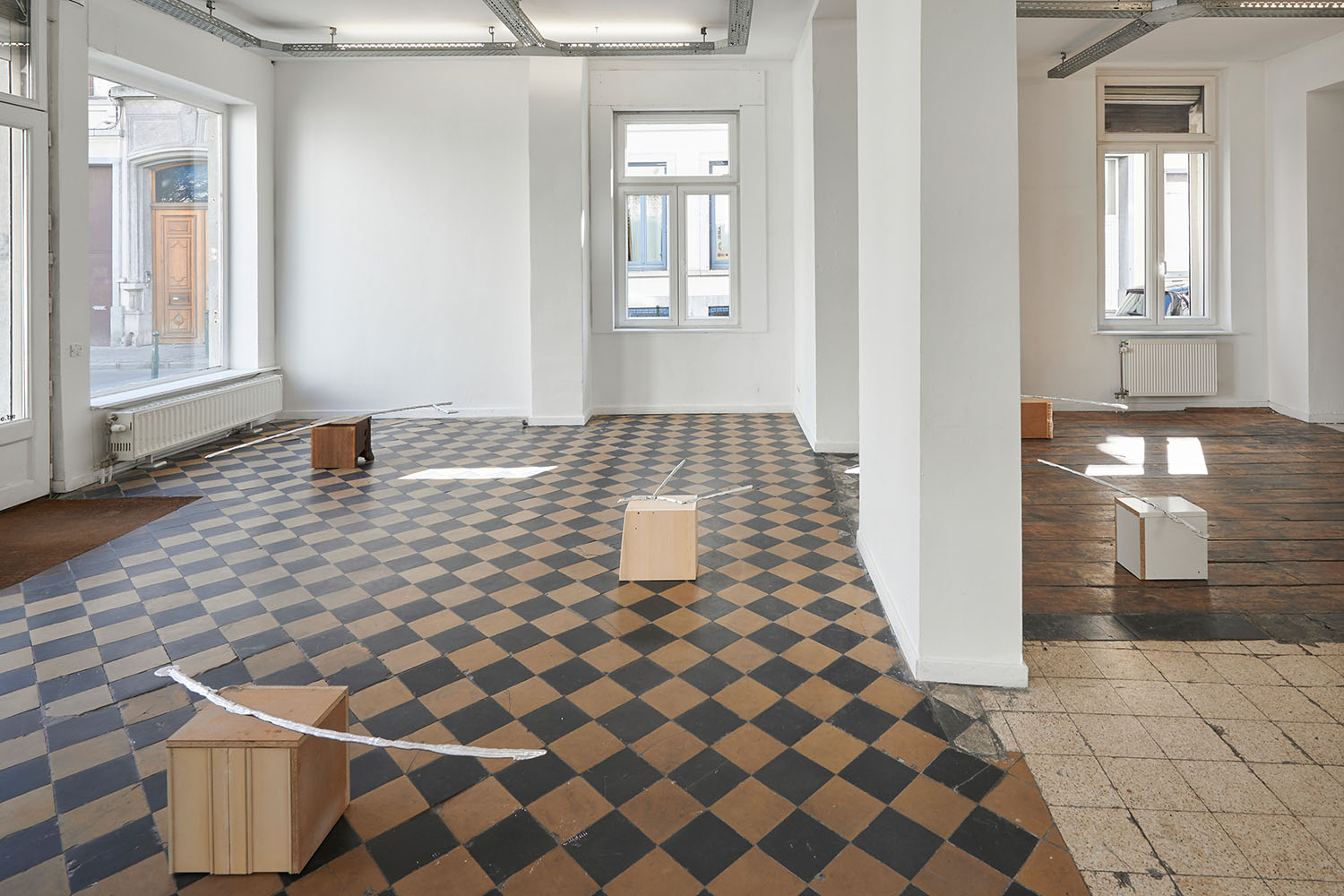
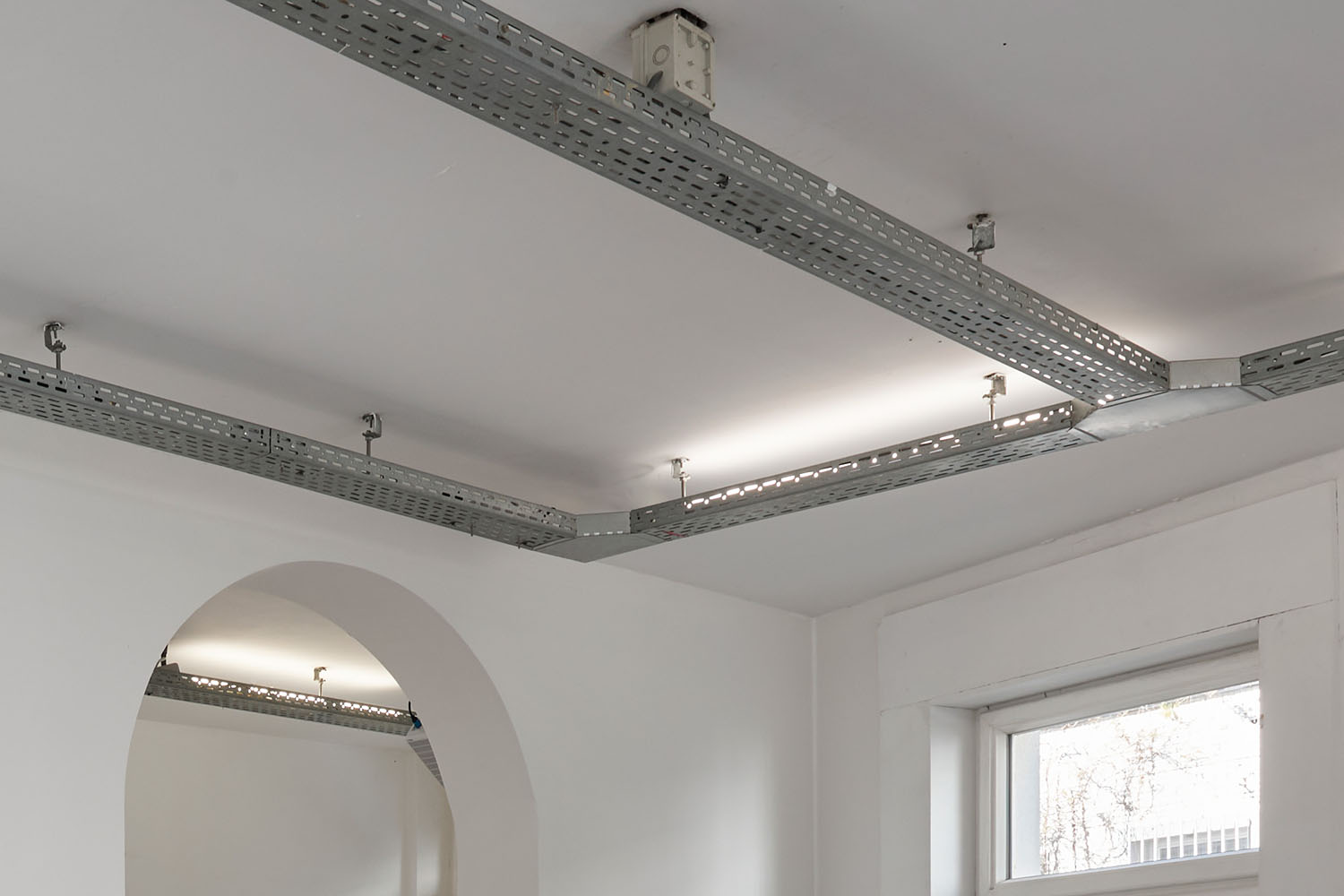
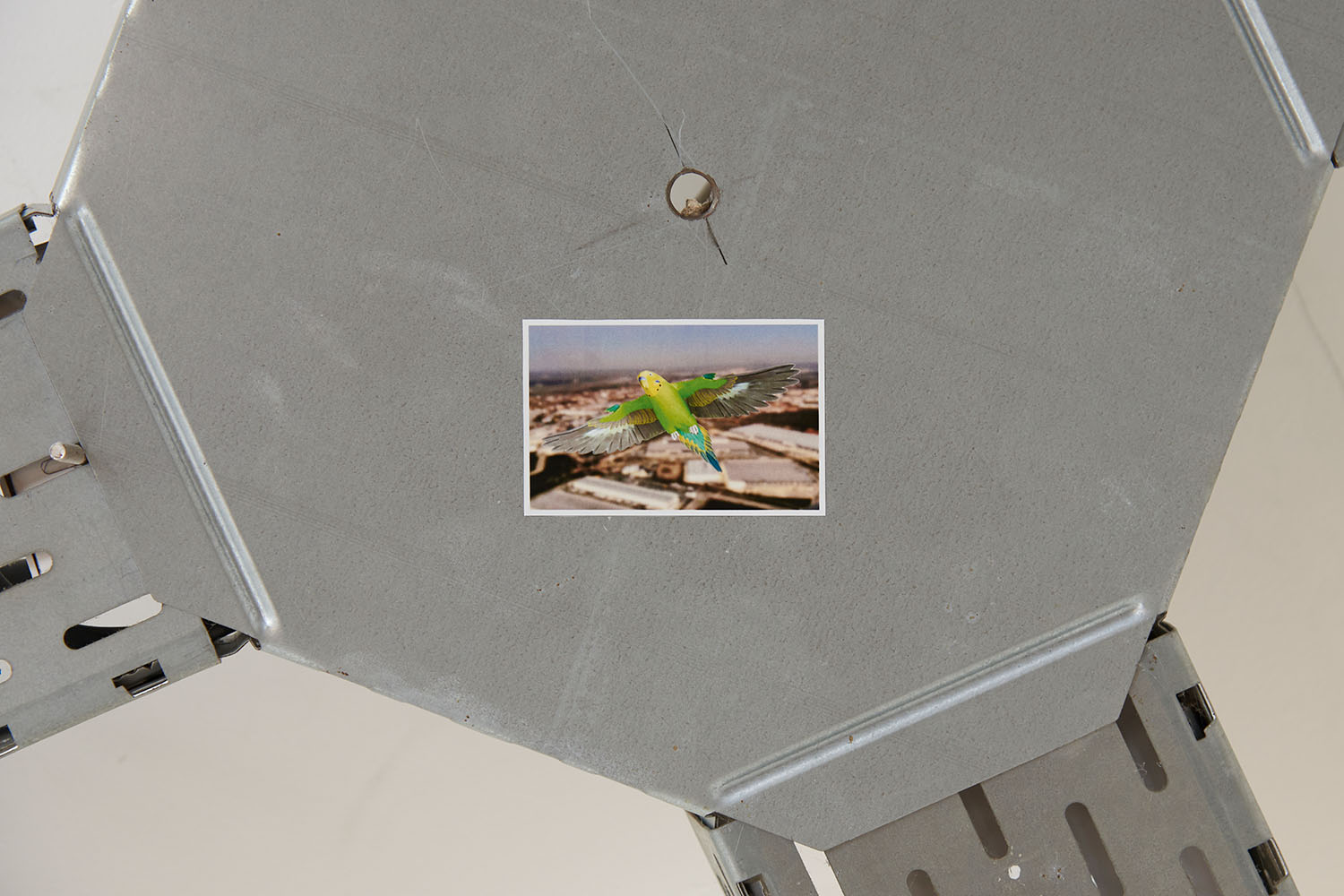
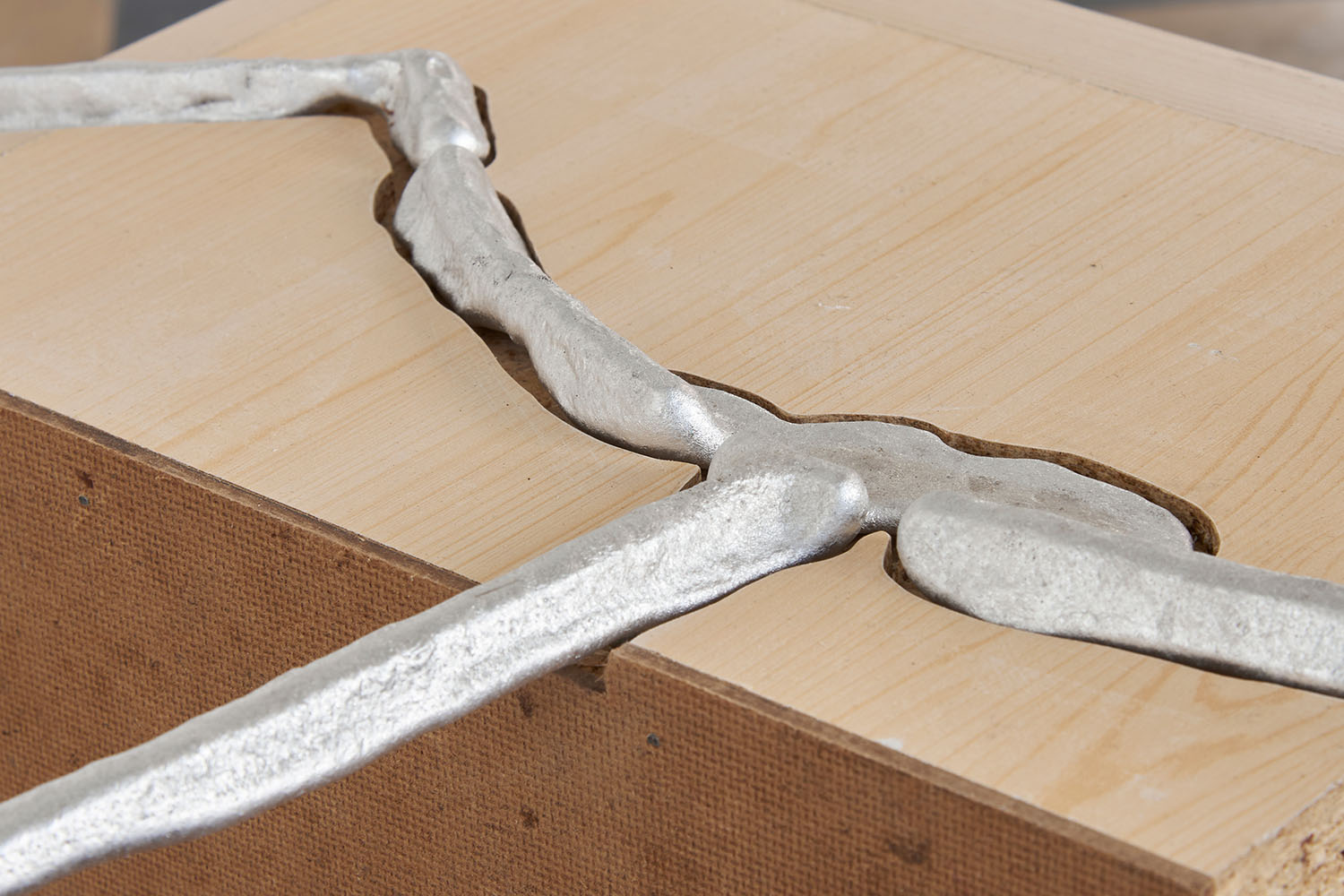
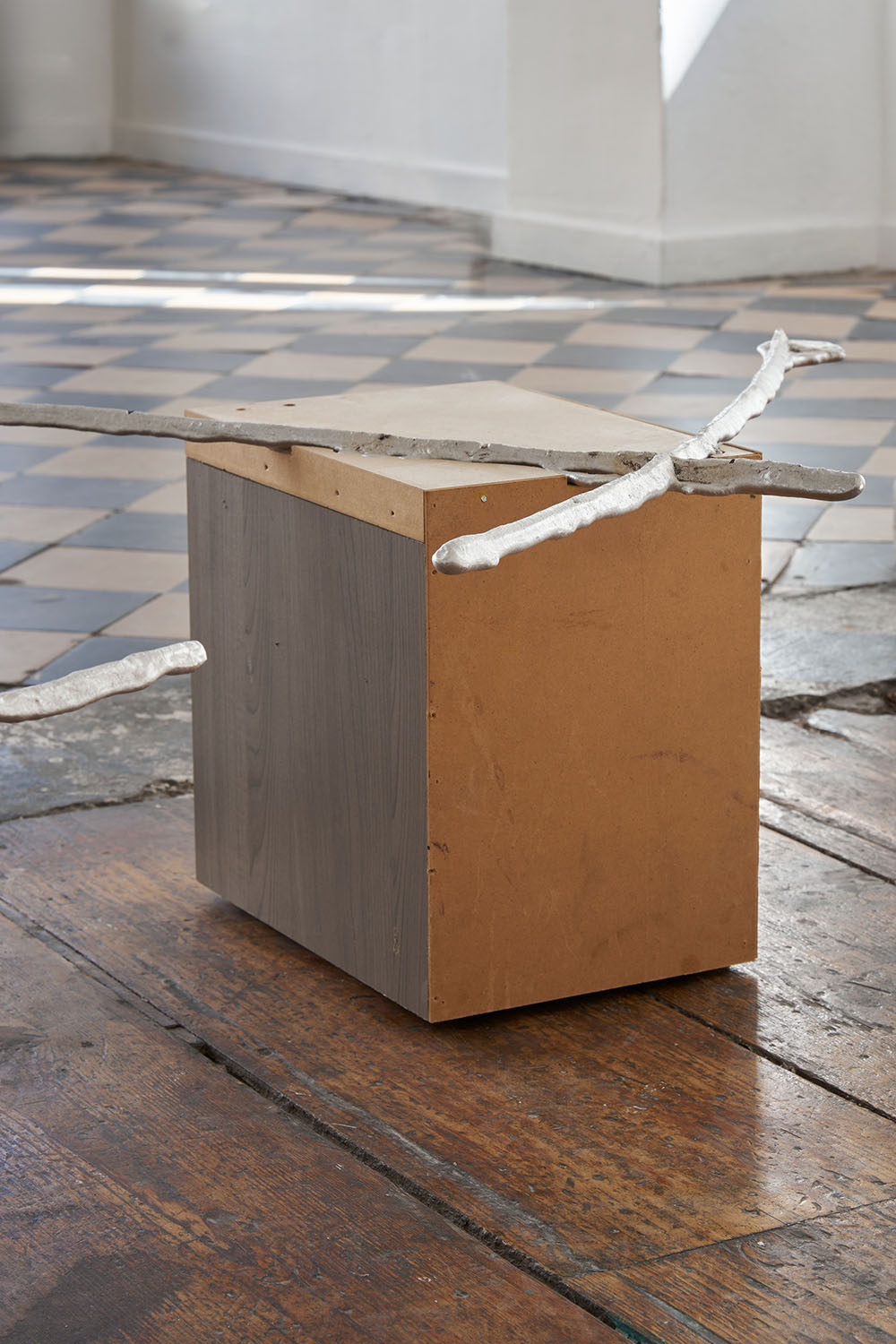
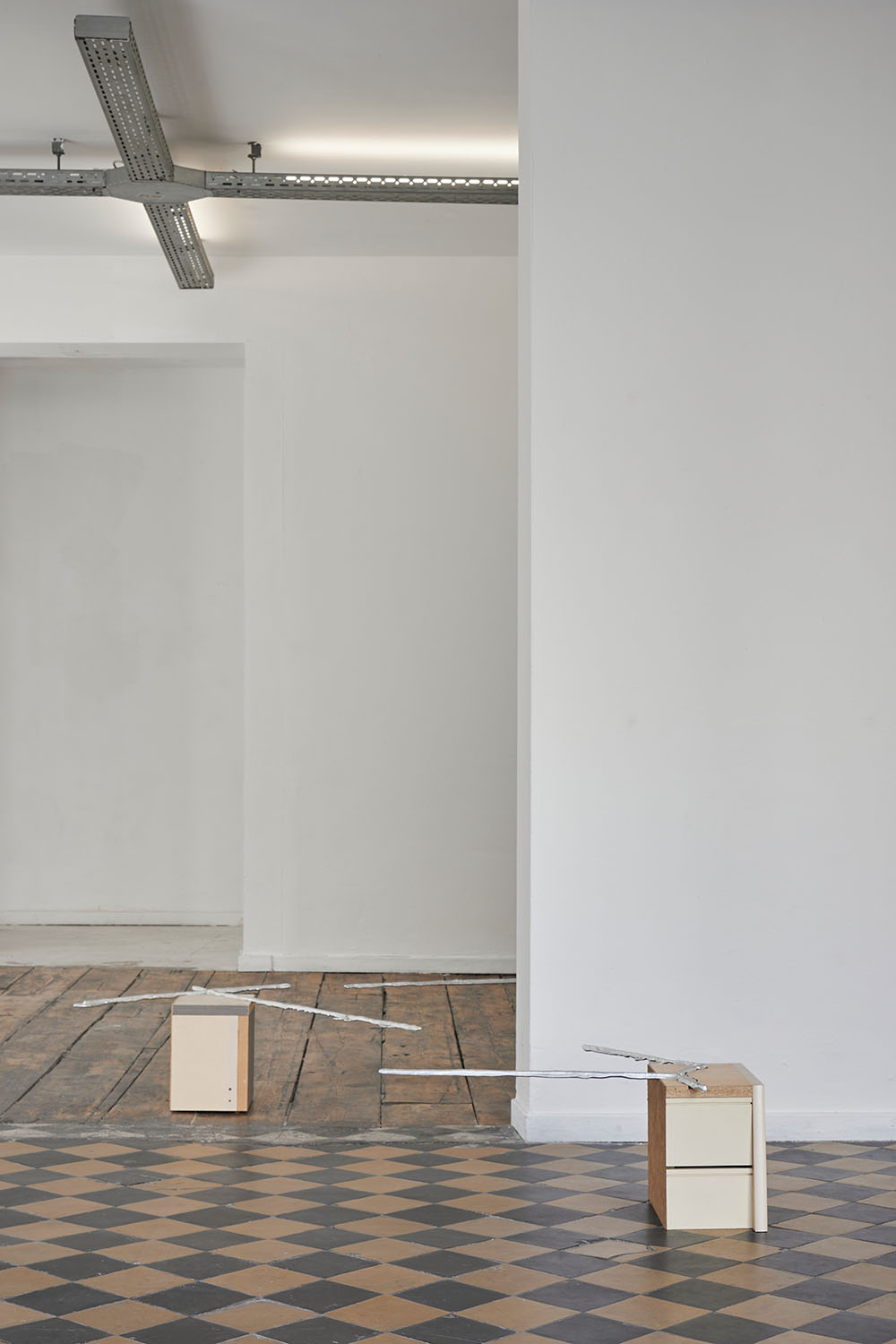
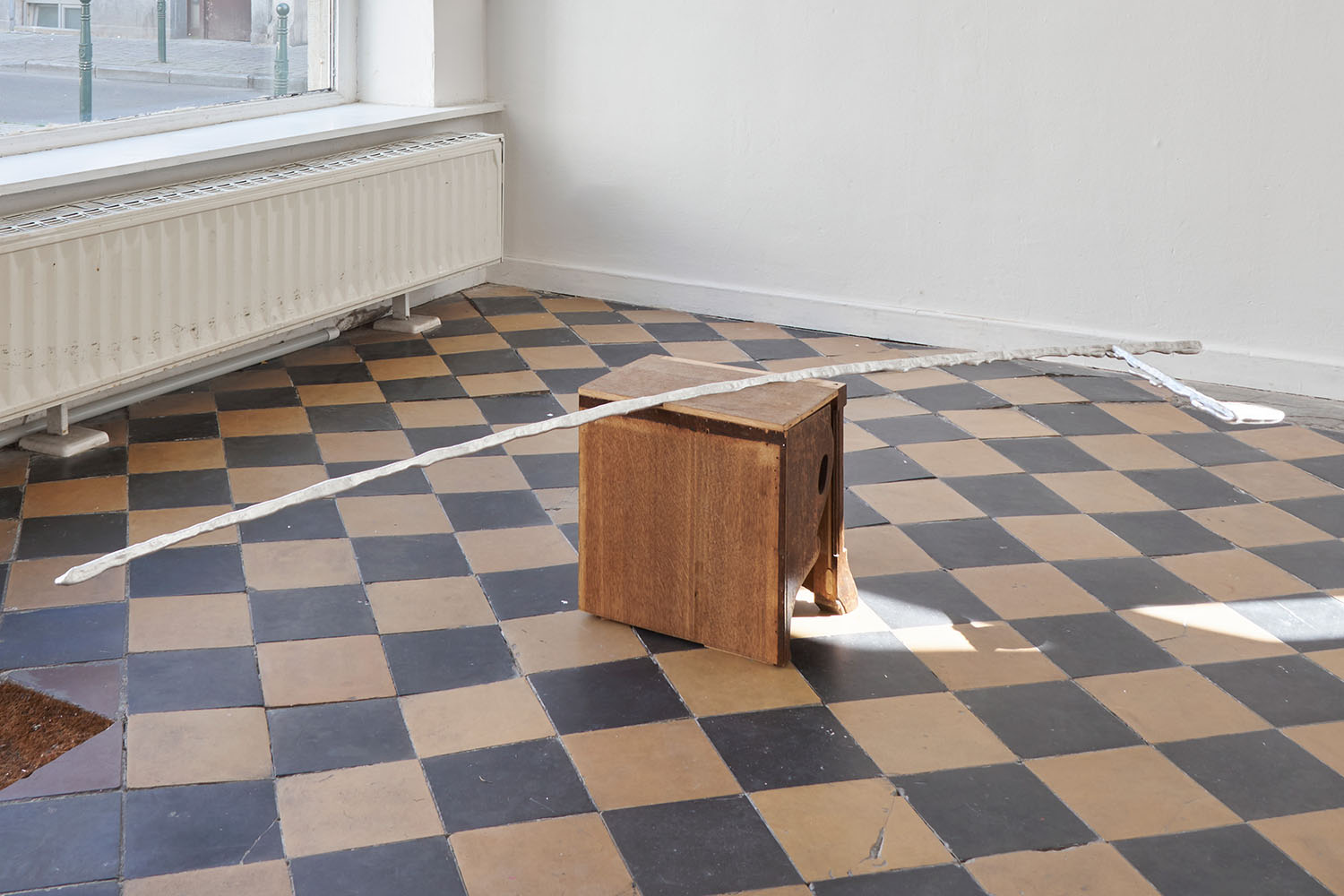
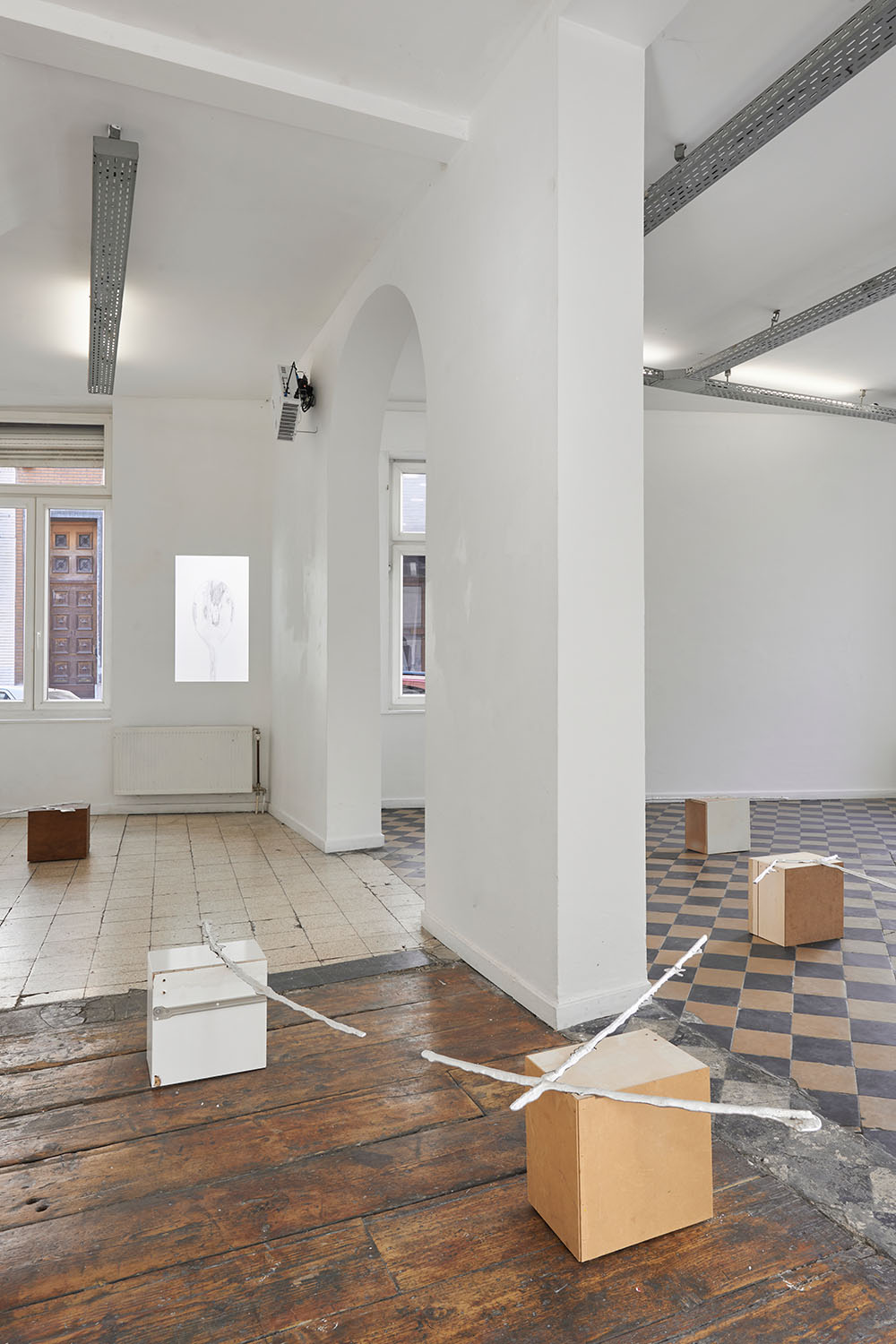
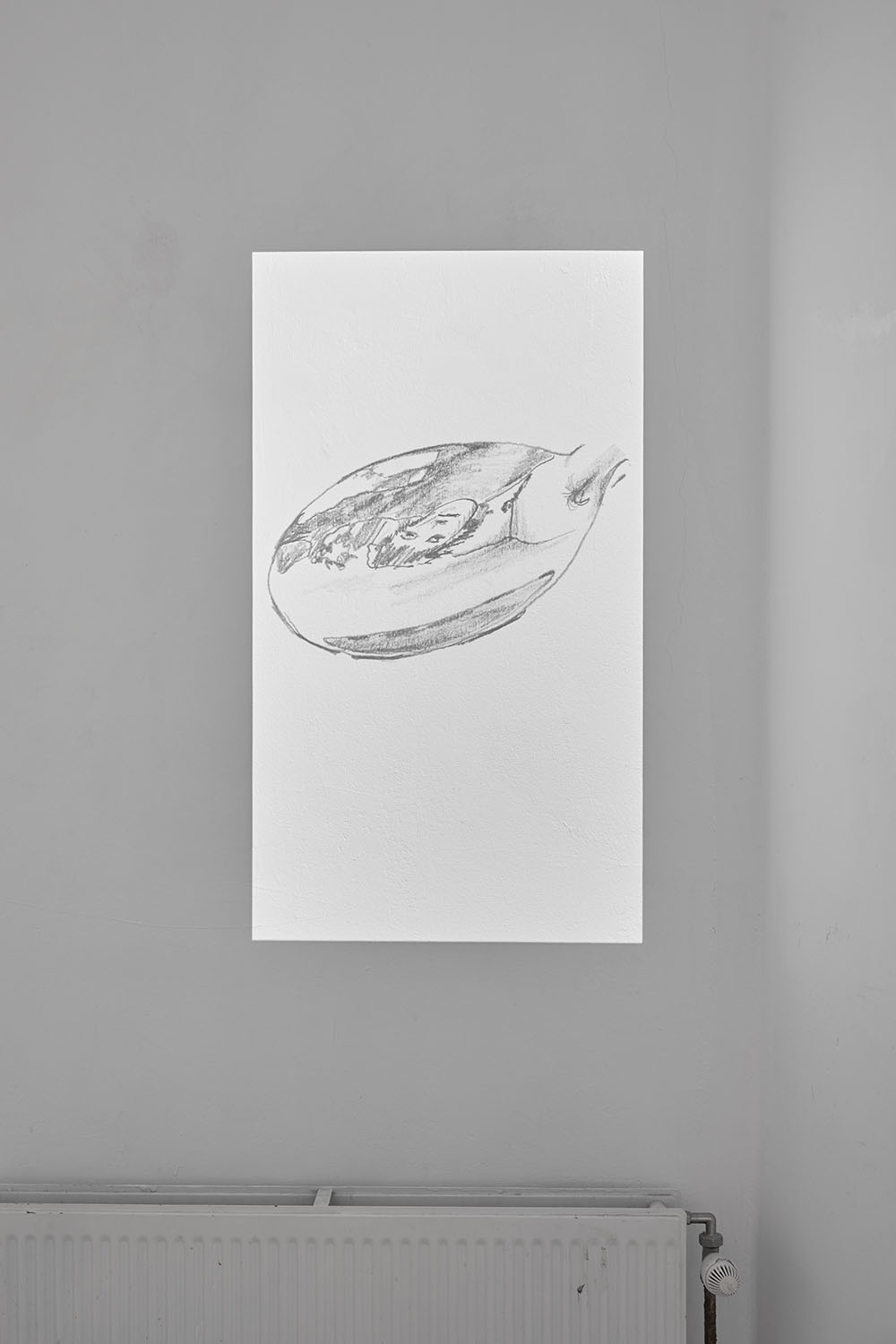
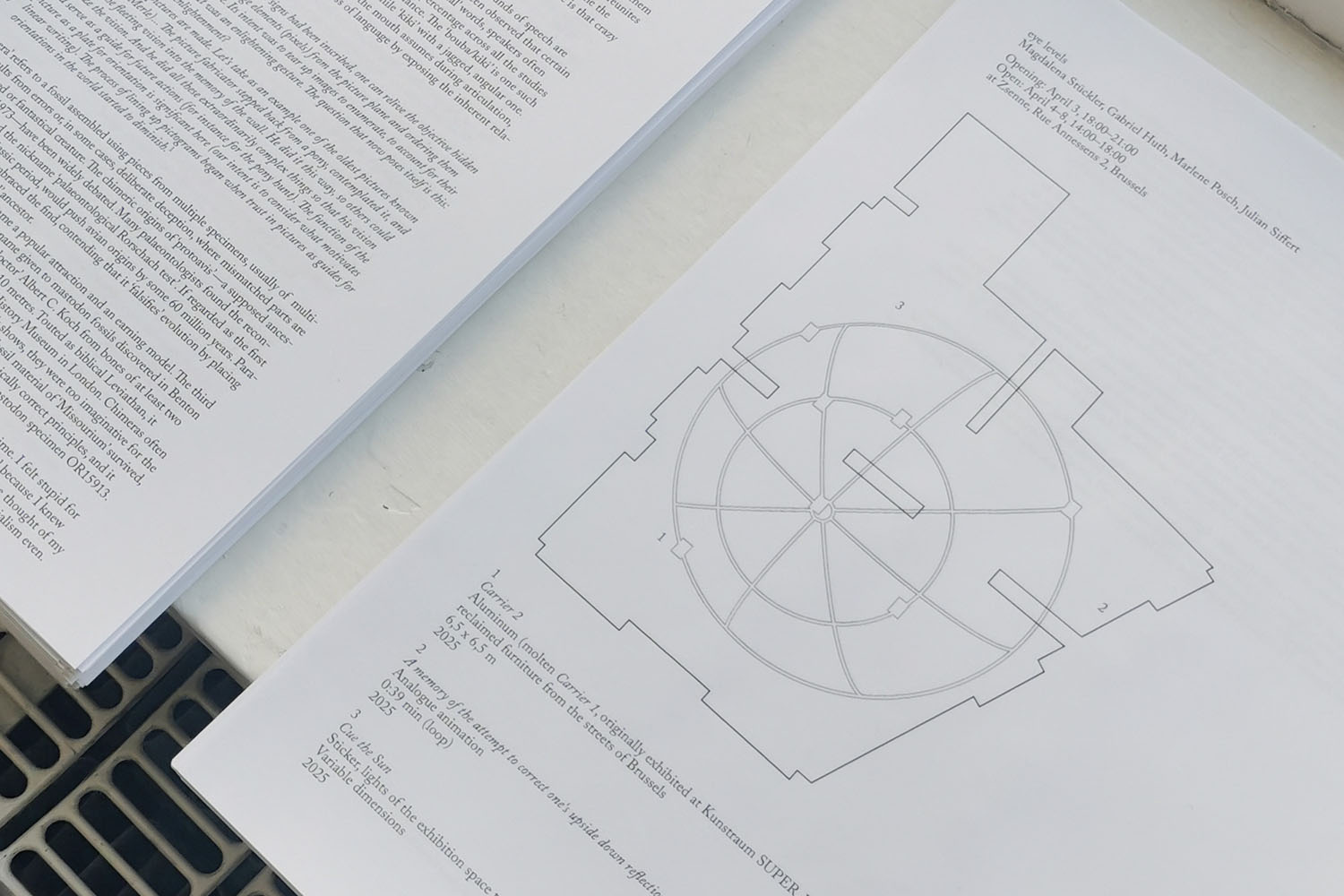
The exhibition eye levels is the third collaboration between the four Vienna-based artists Gabriel Huth, Marlene Posch, Julian Siffert and Magdalena Stückler. They are bringing three new, jointly created works to Brussels in which they took up ideas from their previous exhibition I look up, I look down from my human height. The construction method of a cupola, as found in church buildings or representative architecture, serves as a model for an expansive sculpture. This is juxtaposed with an analog animation film showing a person‘s attempt to correct their upside-down reflection in a spoon and a spatial intervention, involving the lights of the exhibition space.
Documenation: Mina Enowaki
With works by Gleb Amankulov, Benjamin Hirte, David L. Johnson, Tammy Langhinrichs, Artur Schernthaner-Lourdesamy, Miriam Stoney, Magdalena Stückler, Frank Wasser.
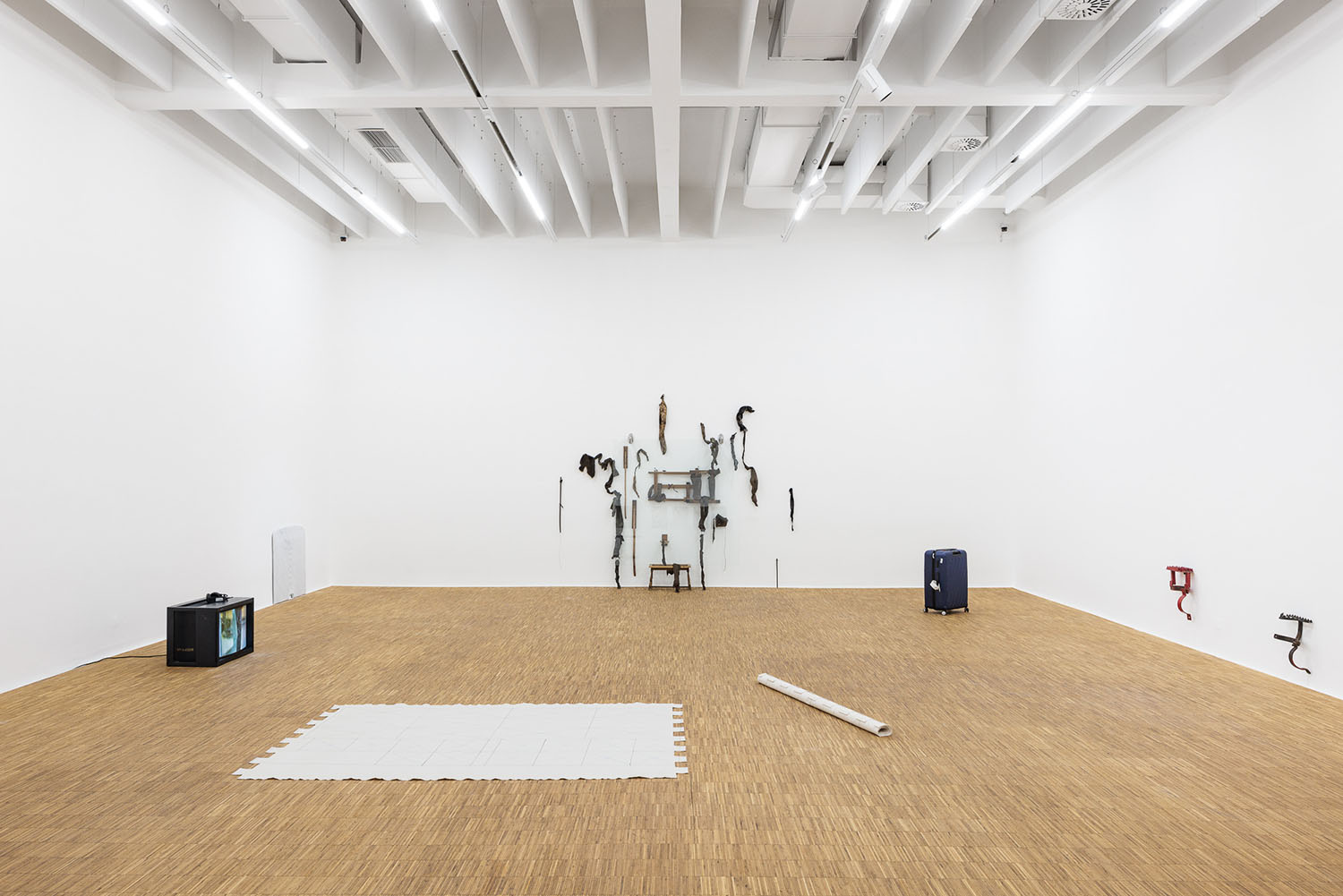
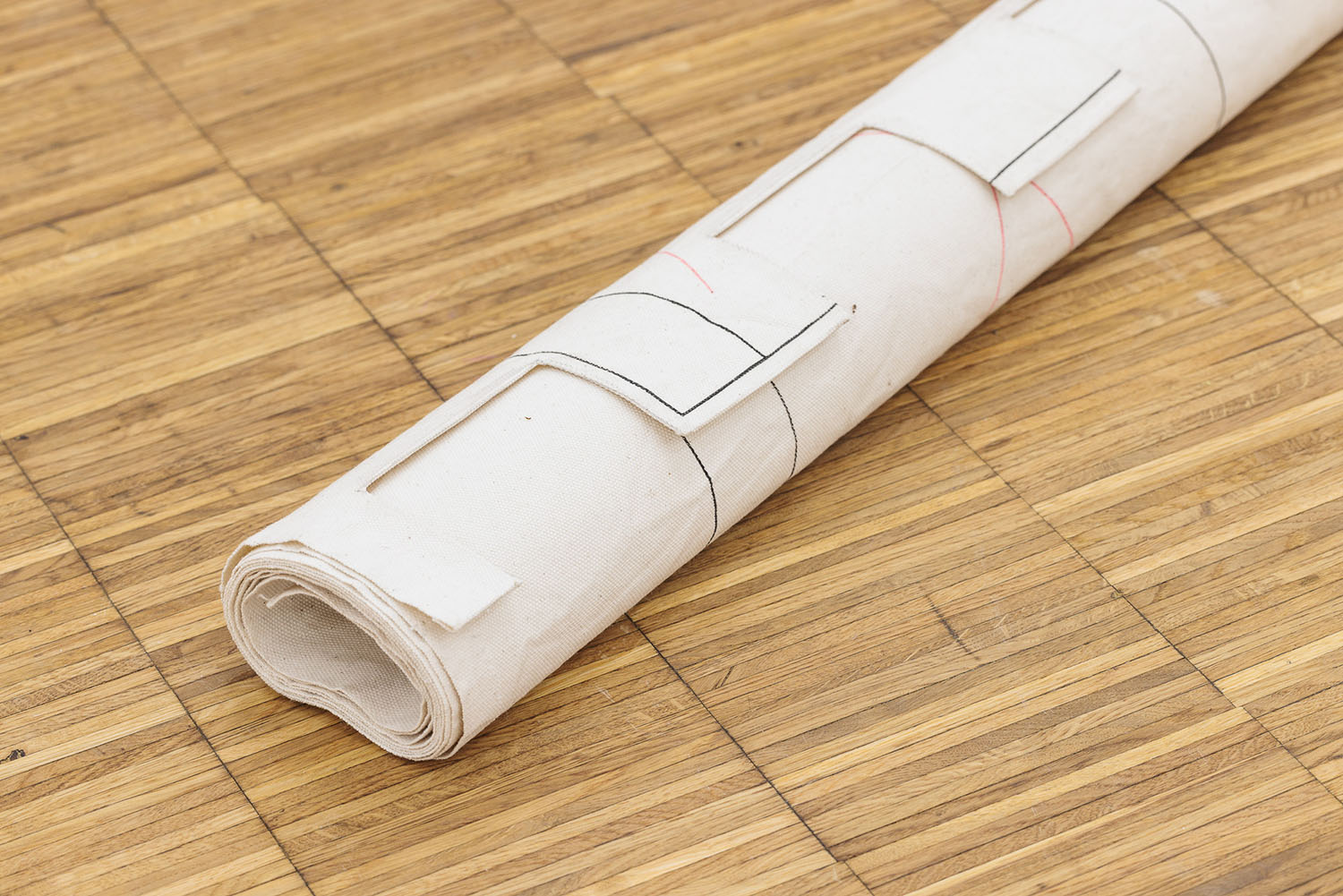
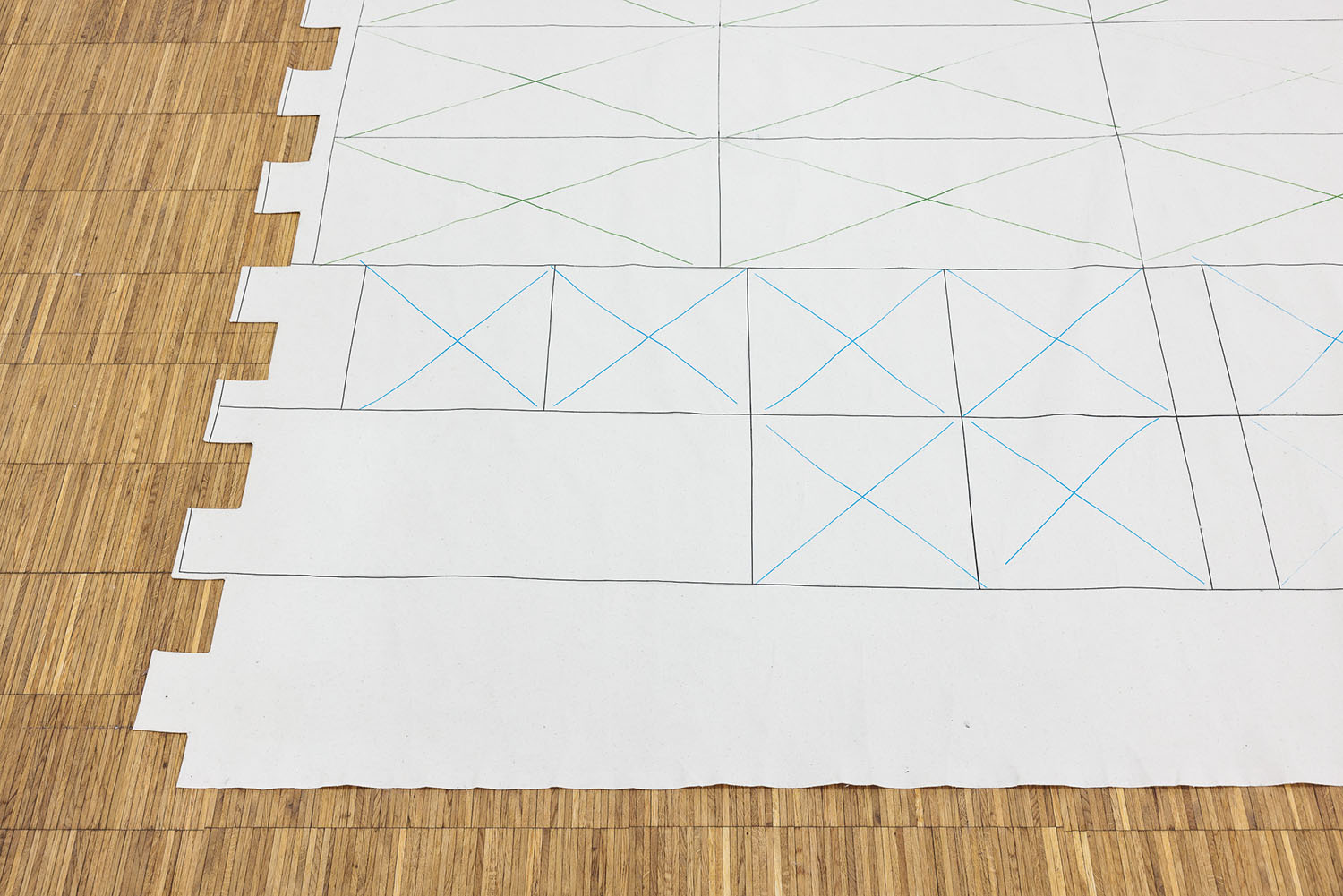
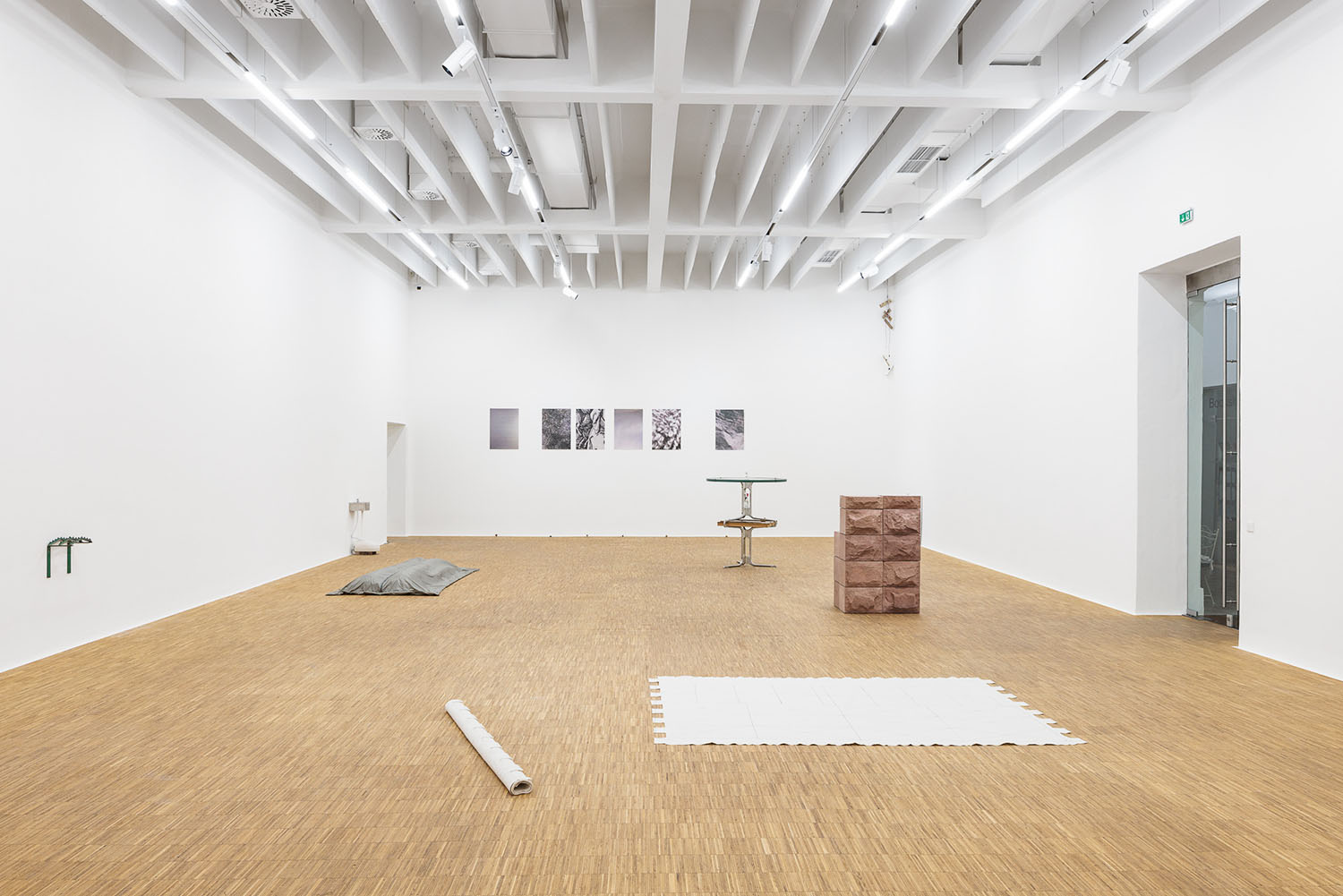
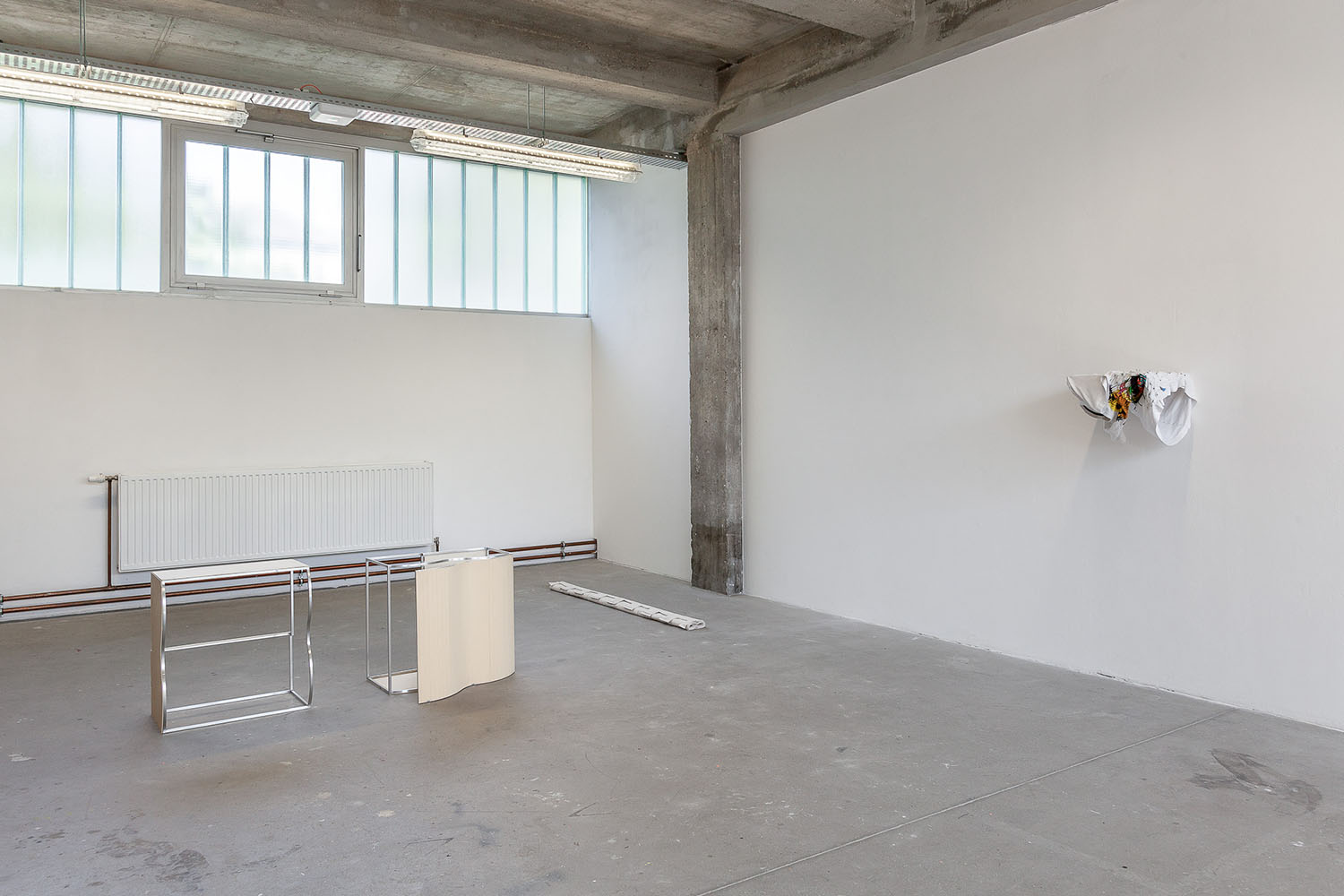
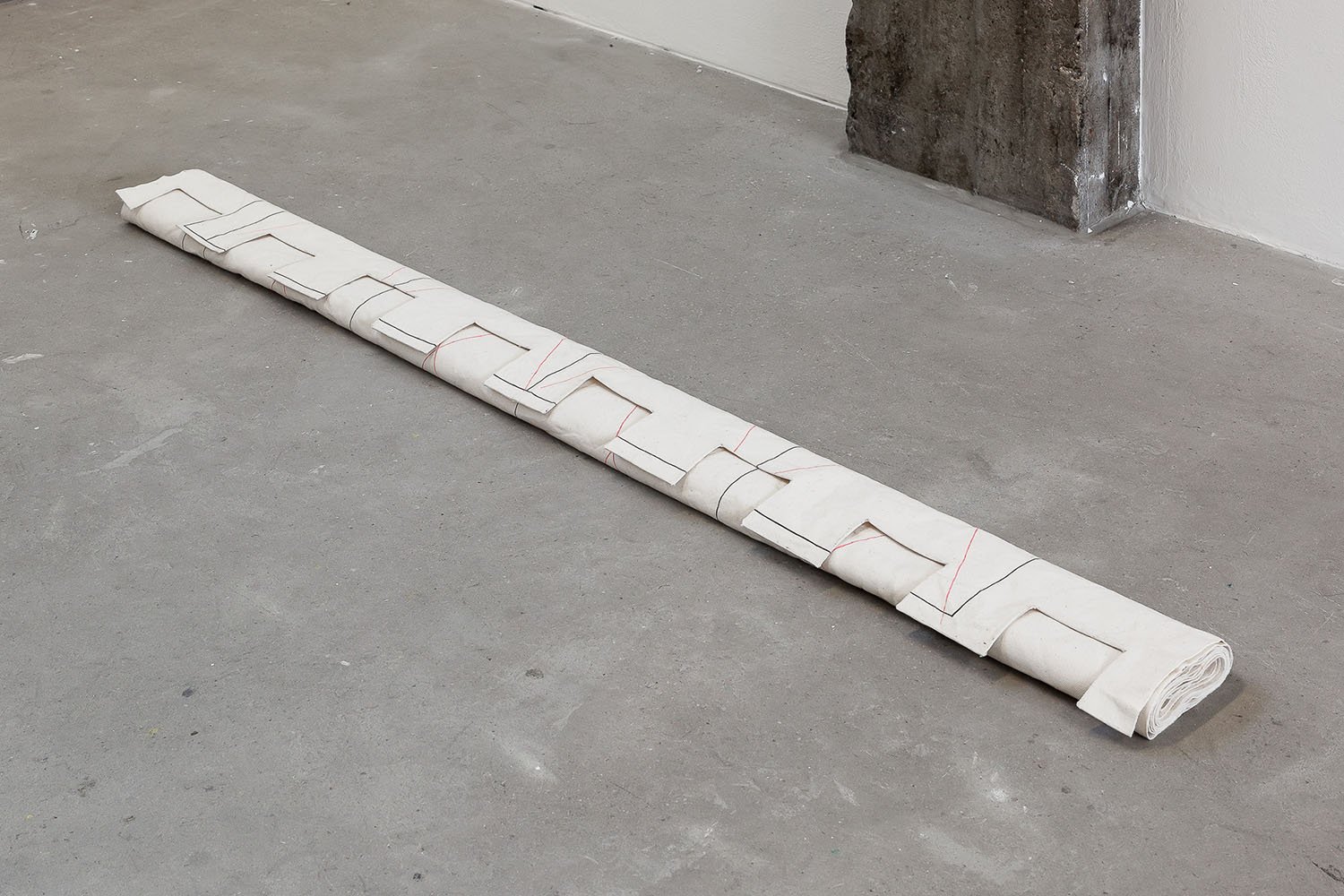
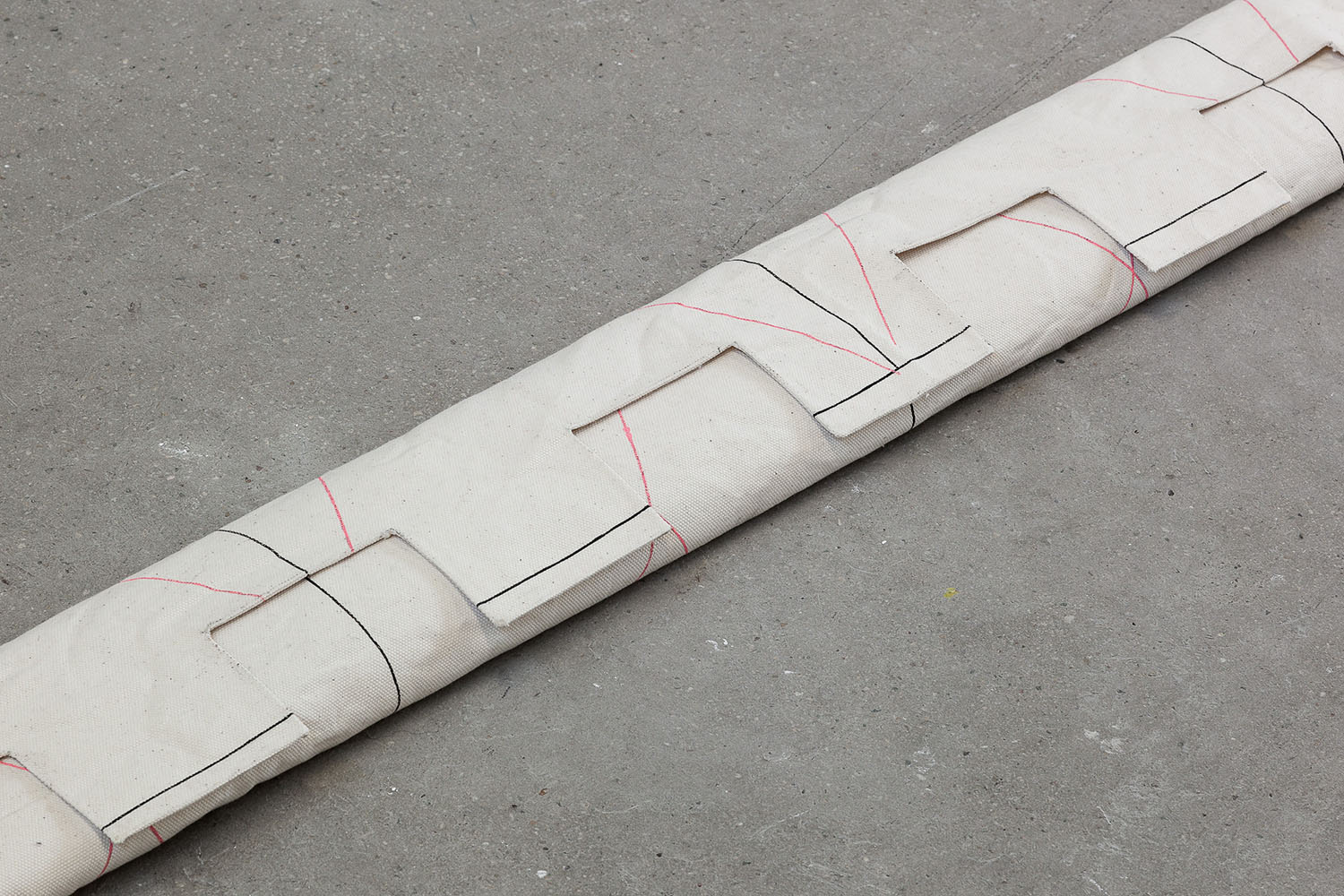
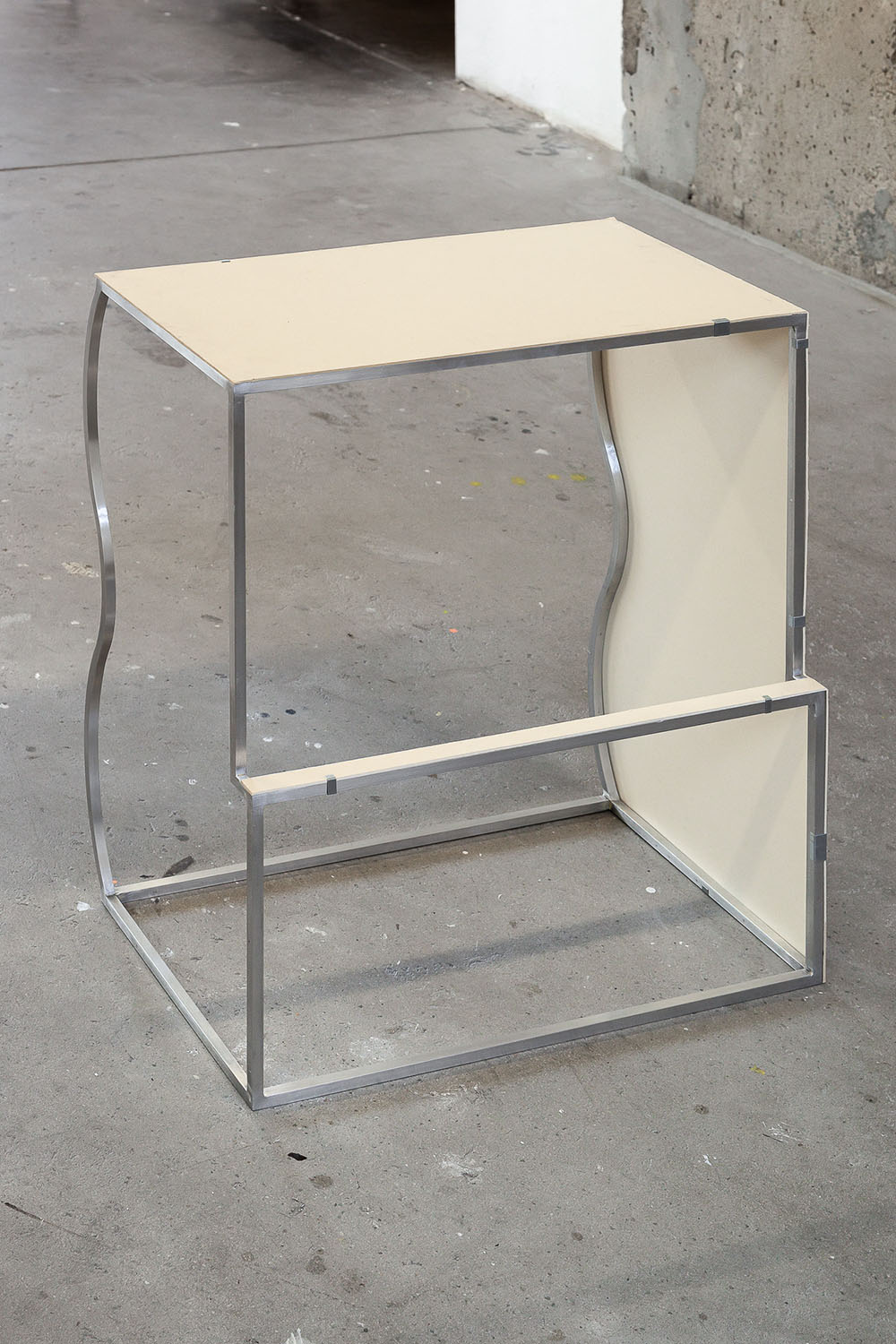
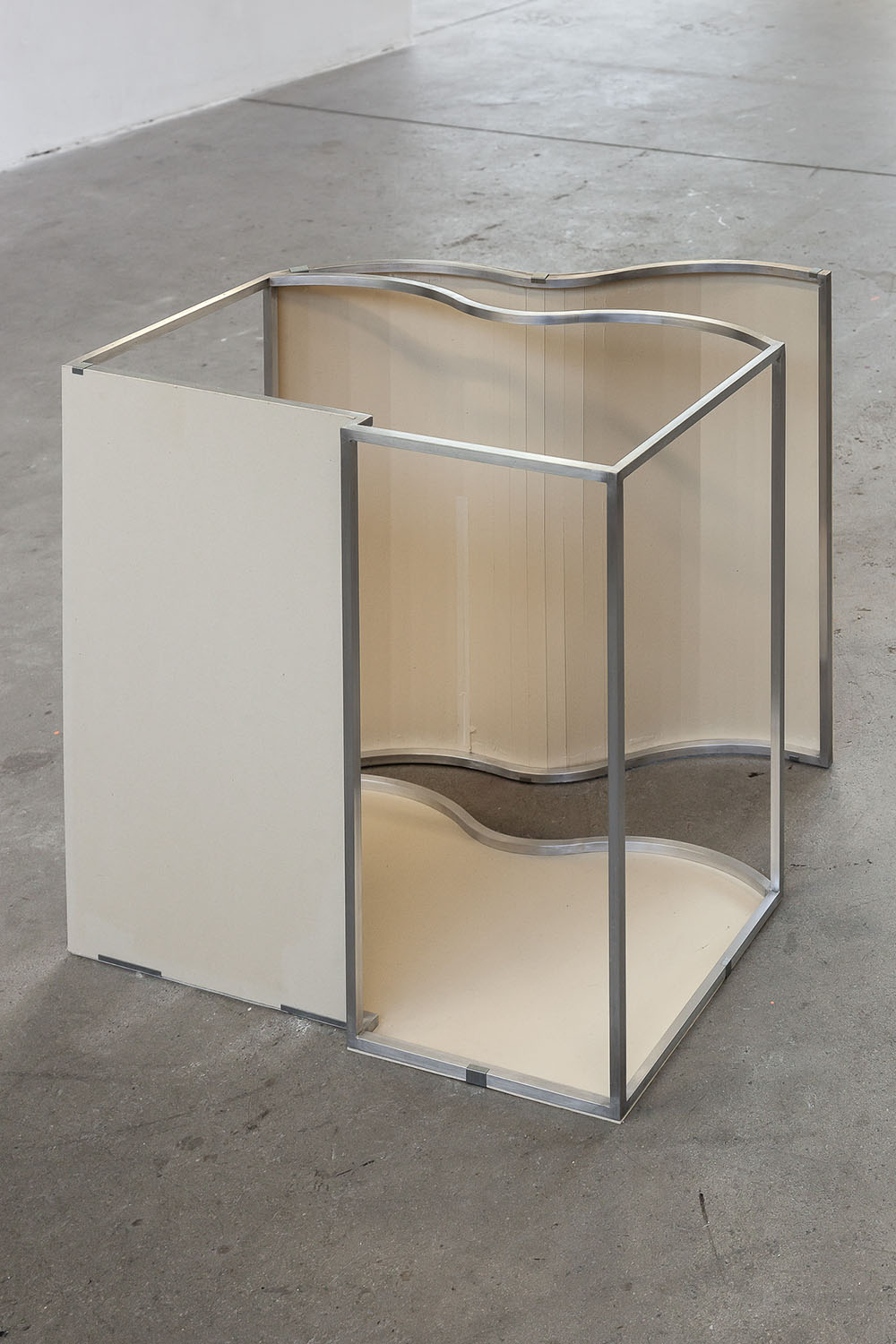
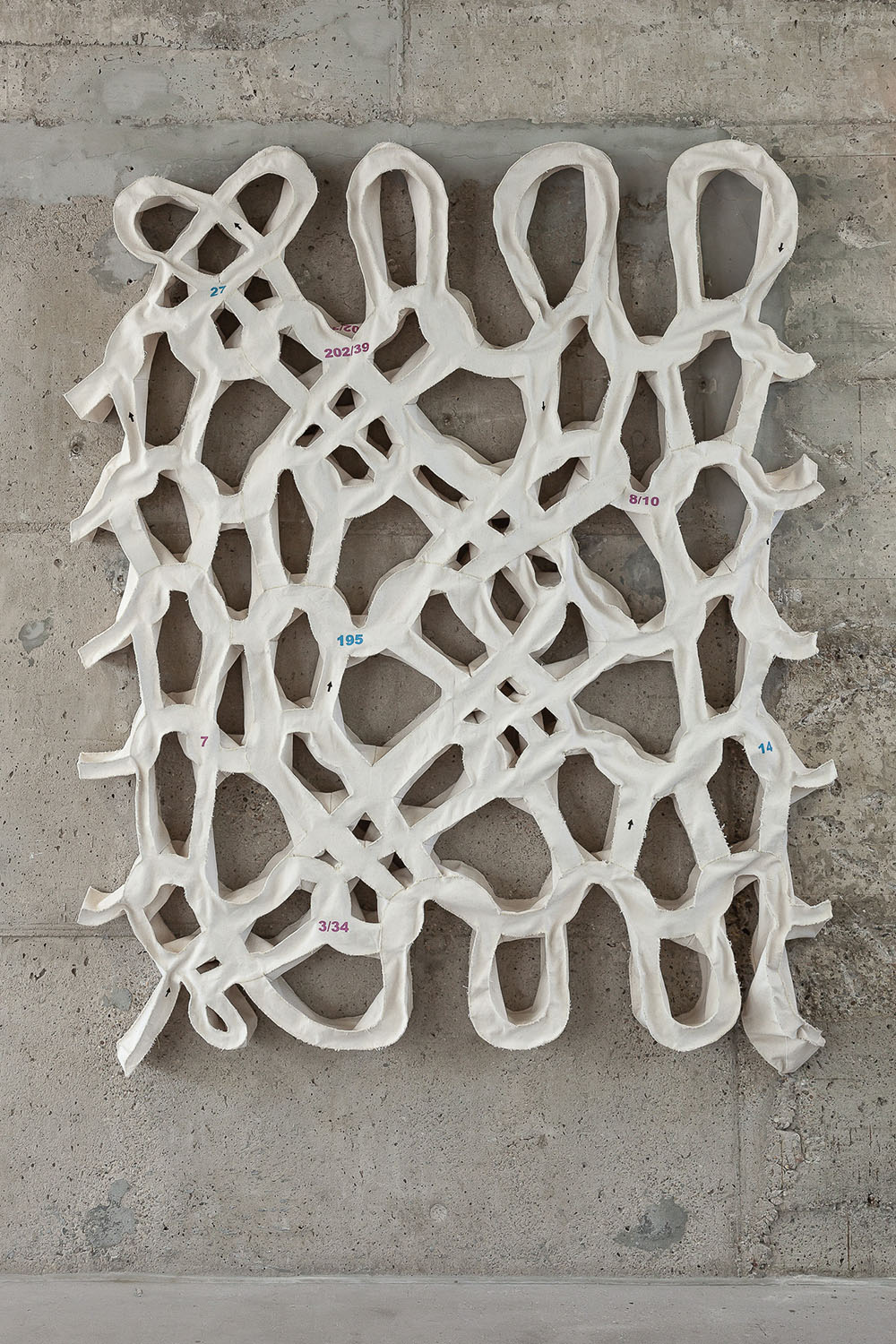
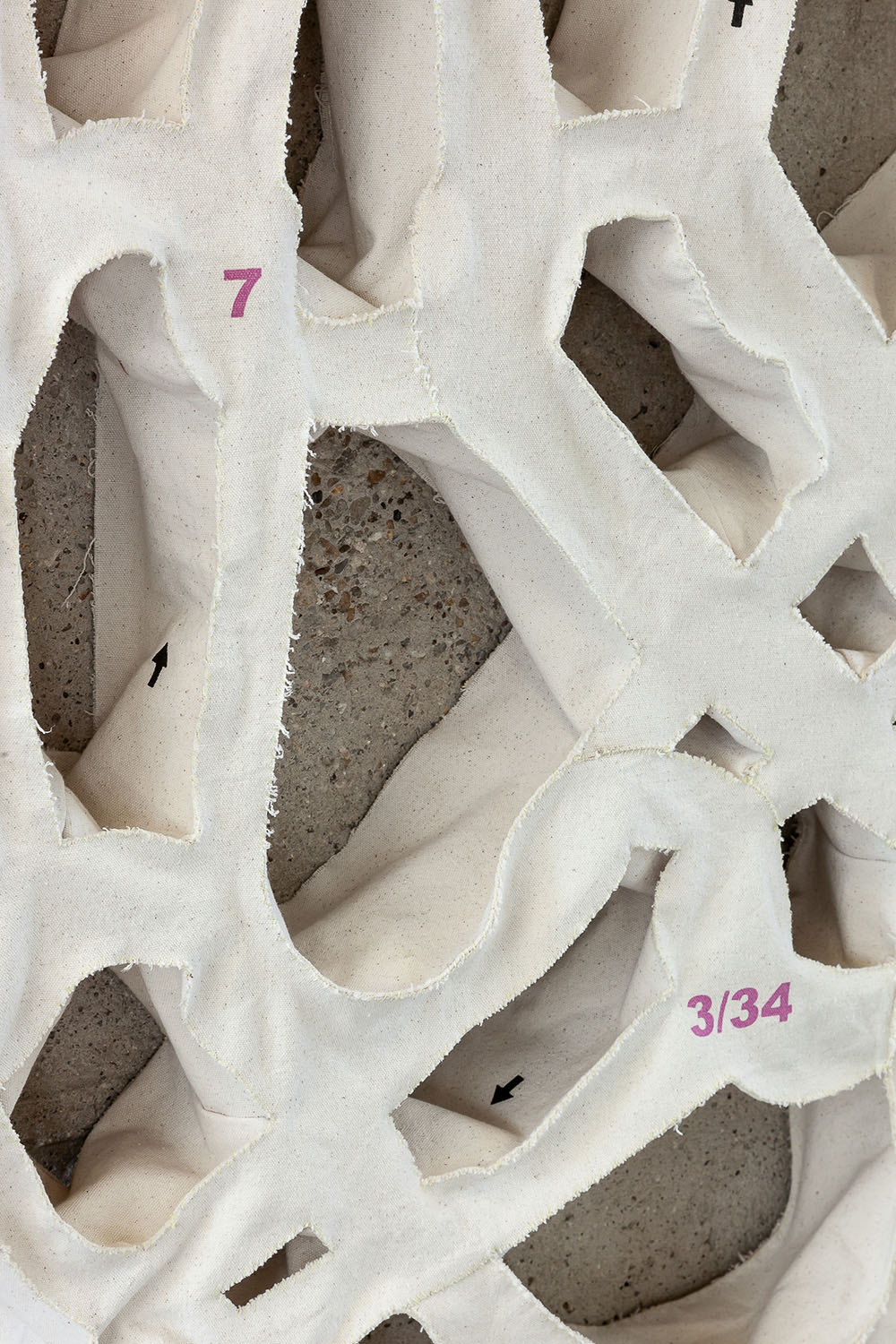
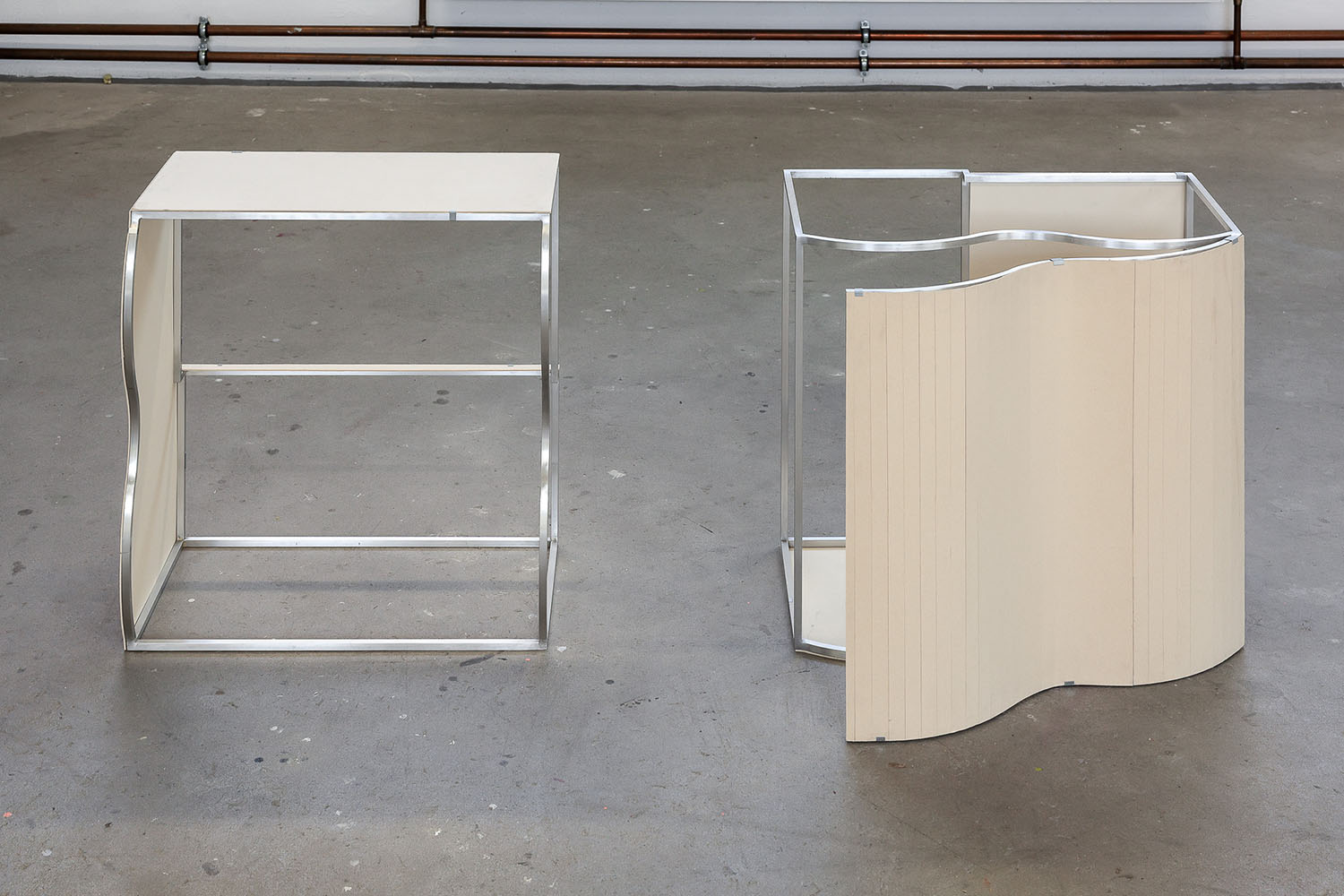
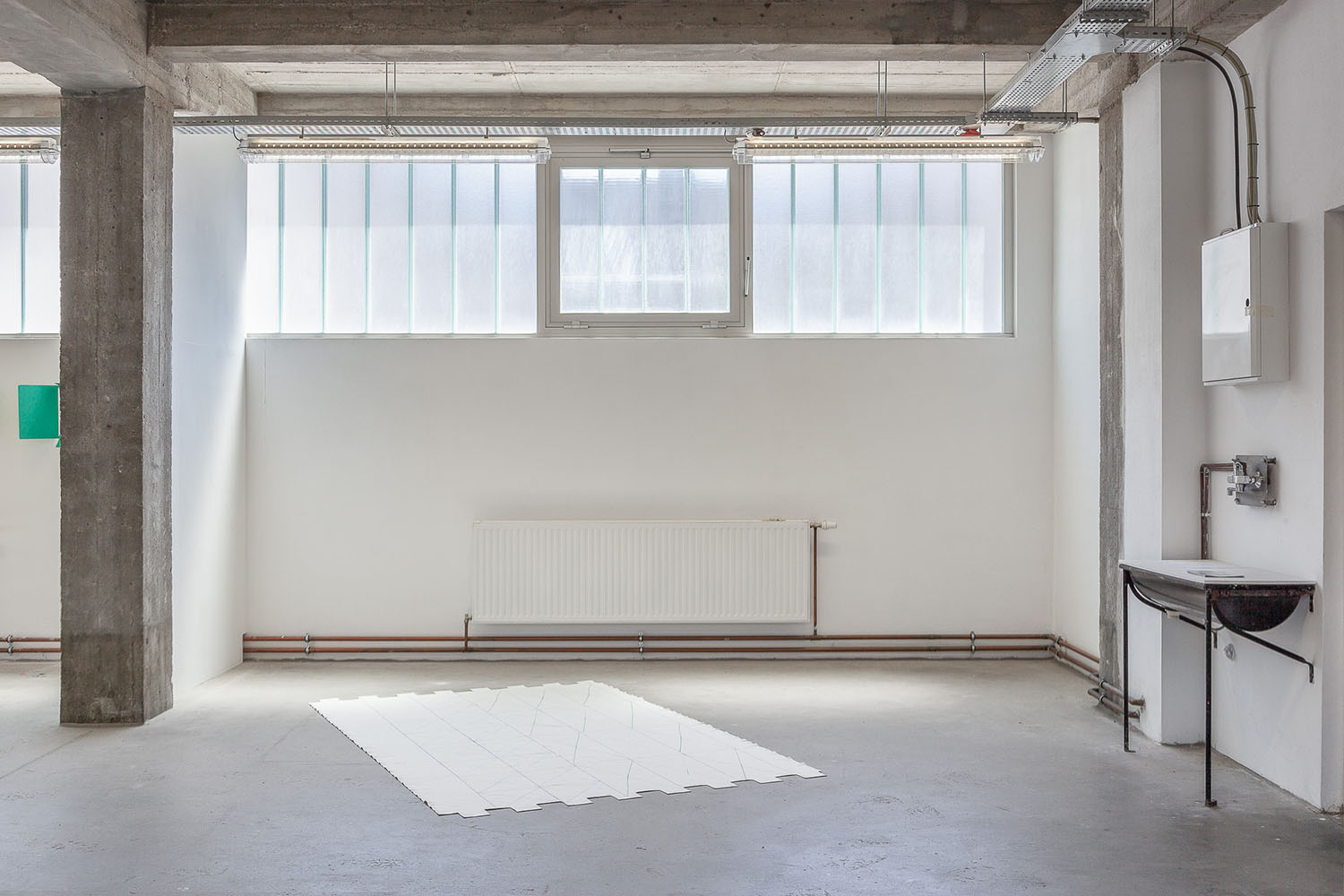
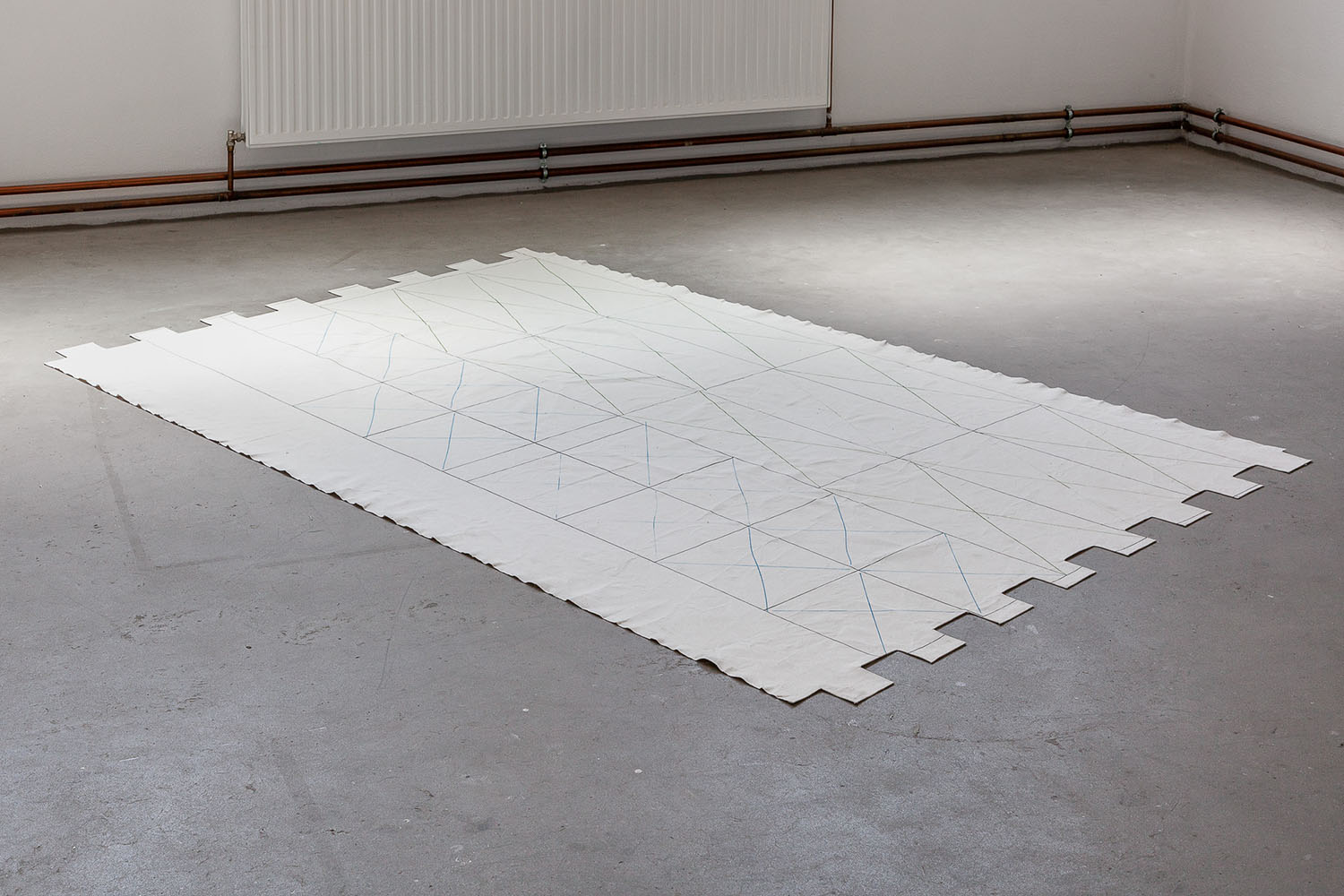
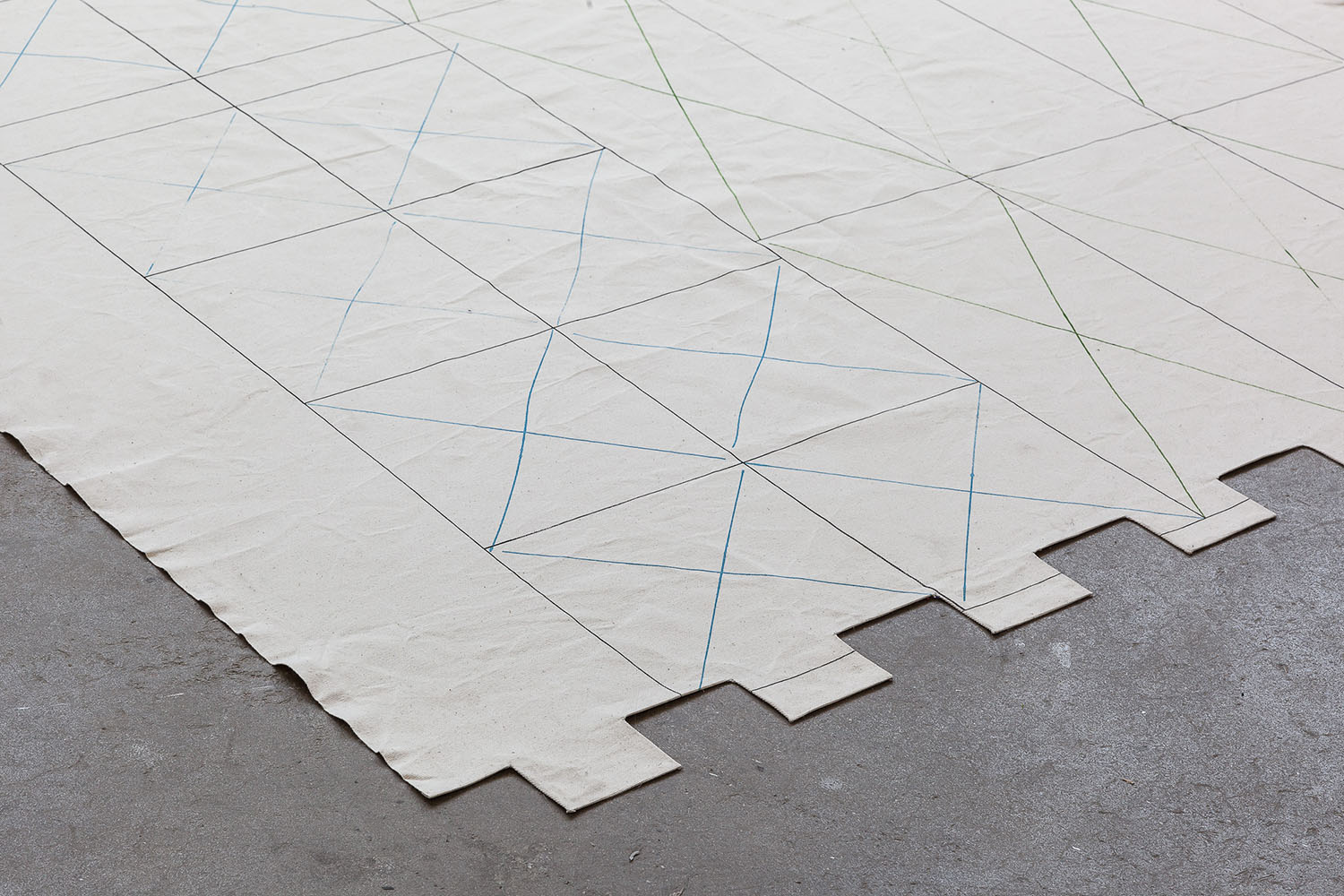
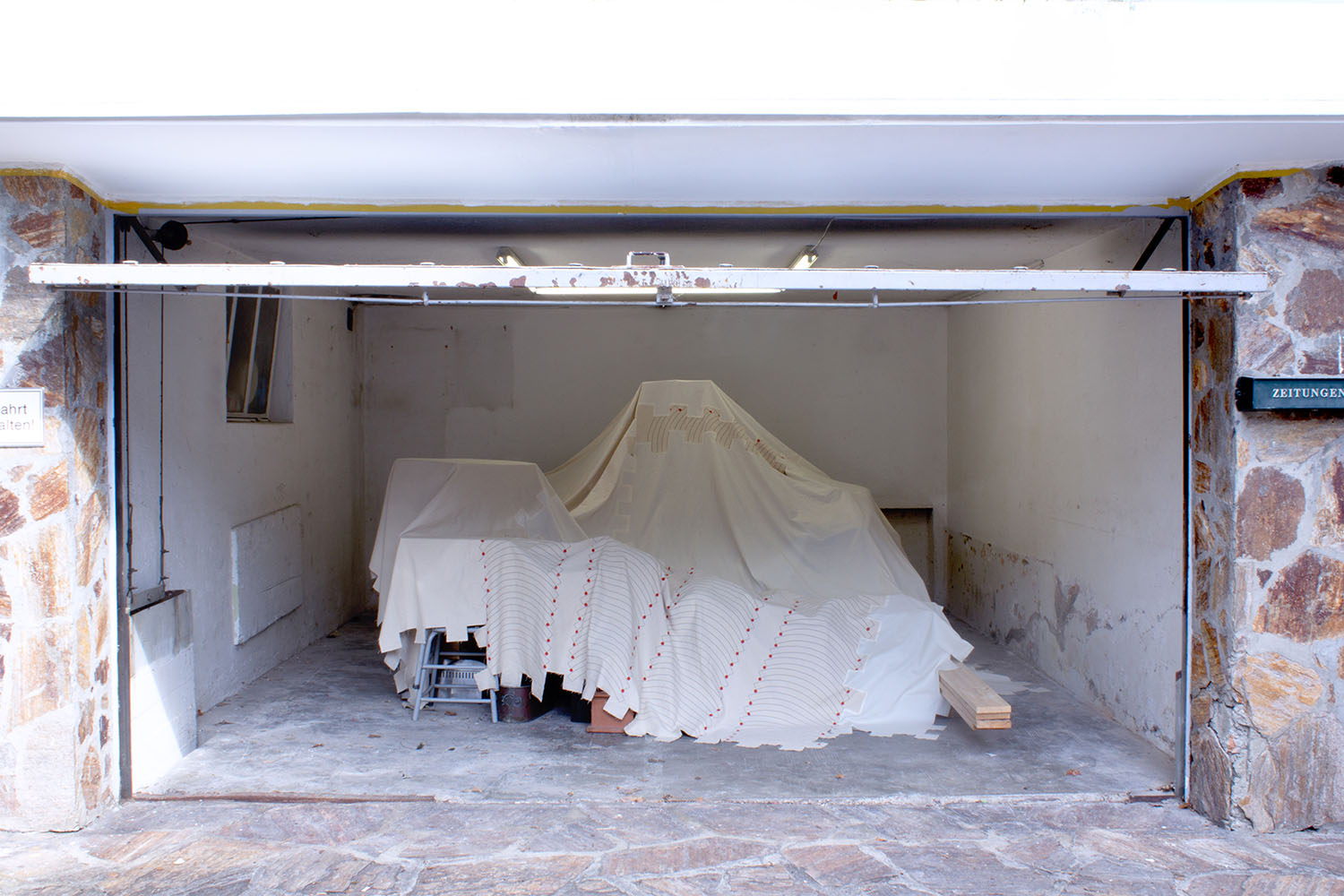
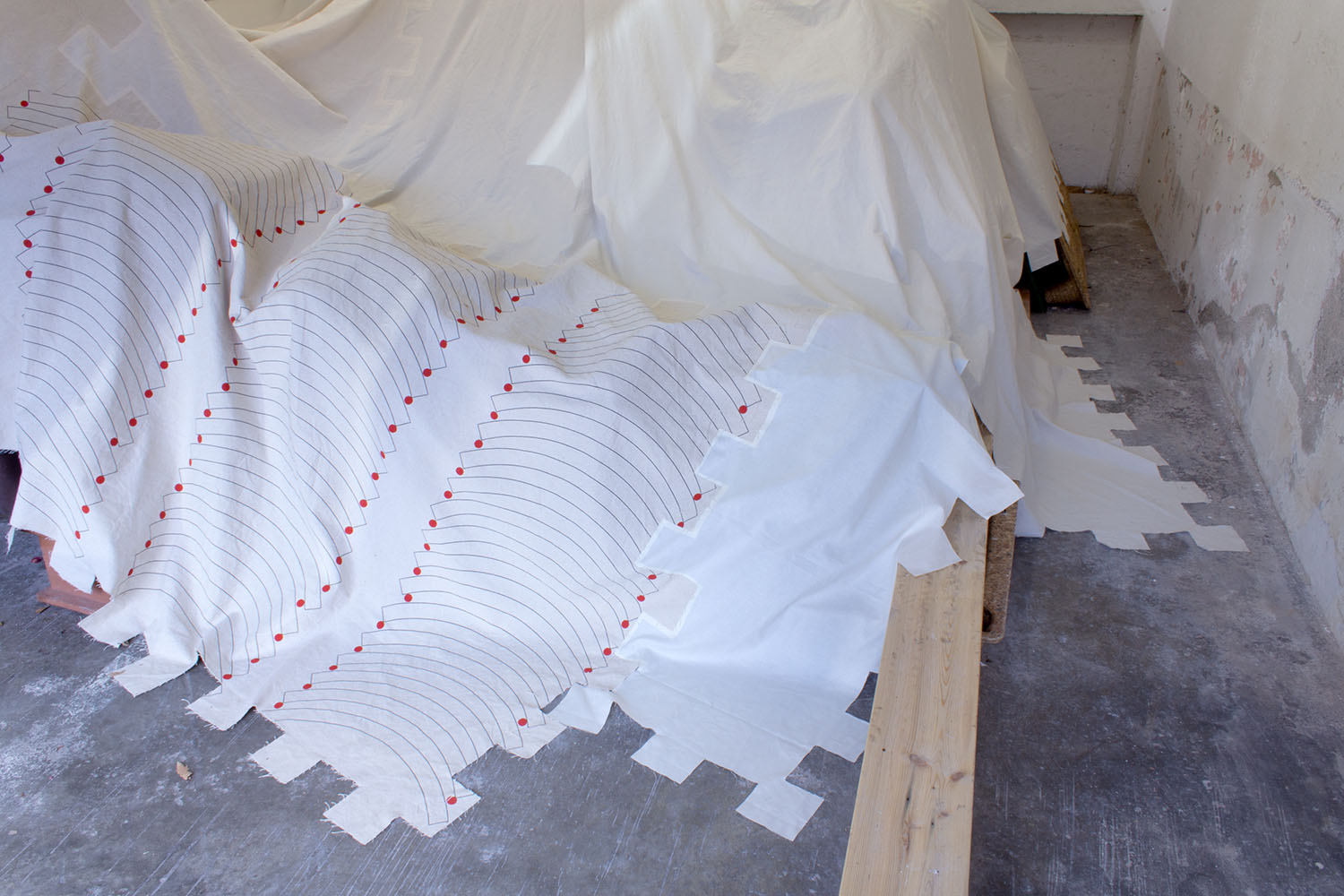
The process behind limited endlessness began with two small sketches that served as templates for creating wooden boxes. Using these drawings, Stückler calculated how many individual pieces could be cut from a plywood sheet while minimizing waste. She then translated this cutting template into full scale using canvas and screen printing, resulting in works (including the rolled piece) that measure 2500 x 1250 cm—the standard size of the plywood sheets from which the wooden parts were cut. The lines of limited endlessness were screen-printed in multiple stages rather than all at once, with each X shape gradually forming through the layering of various lines. This method mimicked the dra- wing process, repurposing the screen-printing technique that is traditionally used for reproduction and duplication. Text by Hana Ostan-Ožbolt-Haas
Documenation: Kunstdokumentation.com

Documenation: Flavio Palasciano
Documenation: Aaron Amar Bhrama
With works by Luisa Berghammer, Lucia Buchberger, Jonathan Dellago, Leandra Erdödy, Olga Mathilde Gärtner, Sebastian Haaf, Fiona Haderer, Felix Hell, Gabriel Huth, Tuomas Lehtomaa, Simon Lindenthaler, Carlotta Lösch-Will, Katharina Mährlen, Luīze Nežberte, Jonathan Pielmeier, Raphael Pohl, Marlene Posch, Sebastian Quast, Clara Reiner, Mika Roumeliotis, Julian Siffert, Lisa Sifkovits, Leon Simonis, Nana Sorgo, Philipp Steinkellner, Magdalena Stückler, Juan Francisco Vera, Tatiana Vishnyakova, Bartholomaeus Wächter, Kristin Wadlig and Janina Weißengruber.
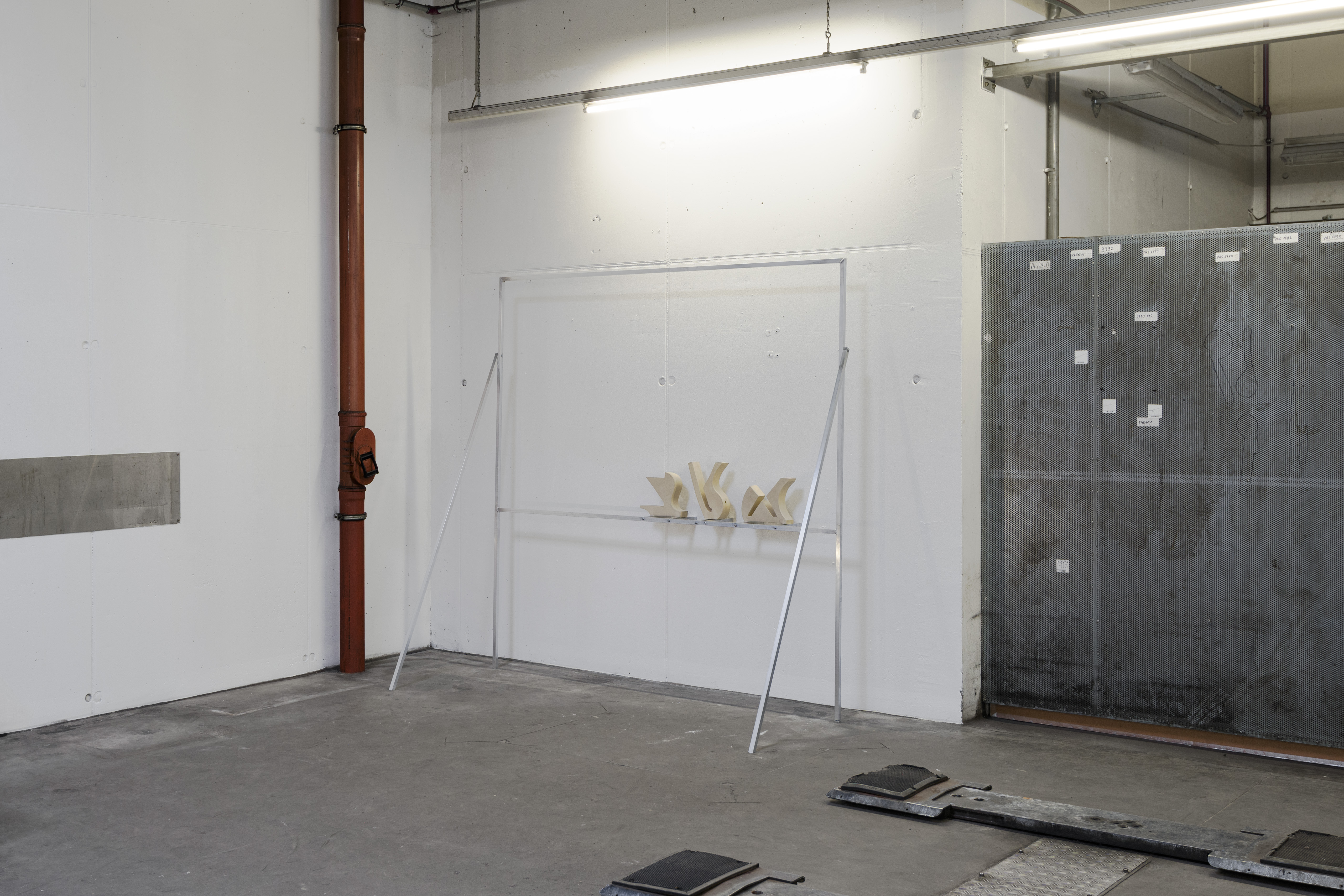
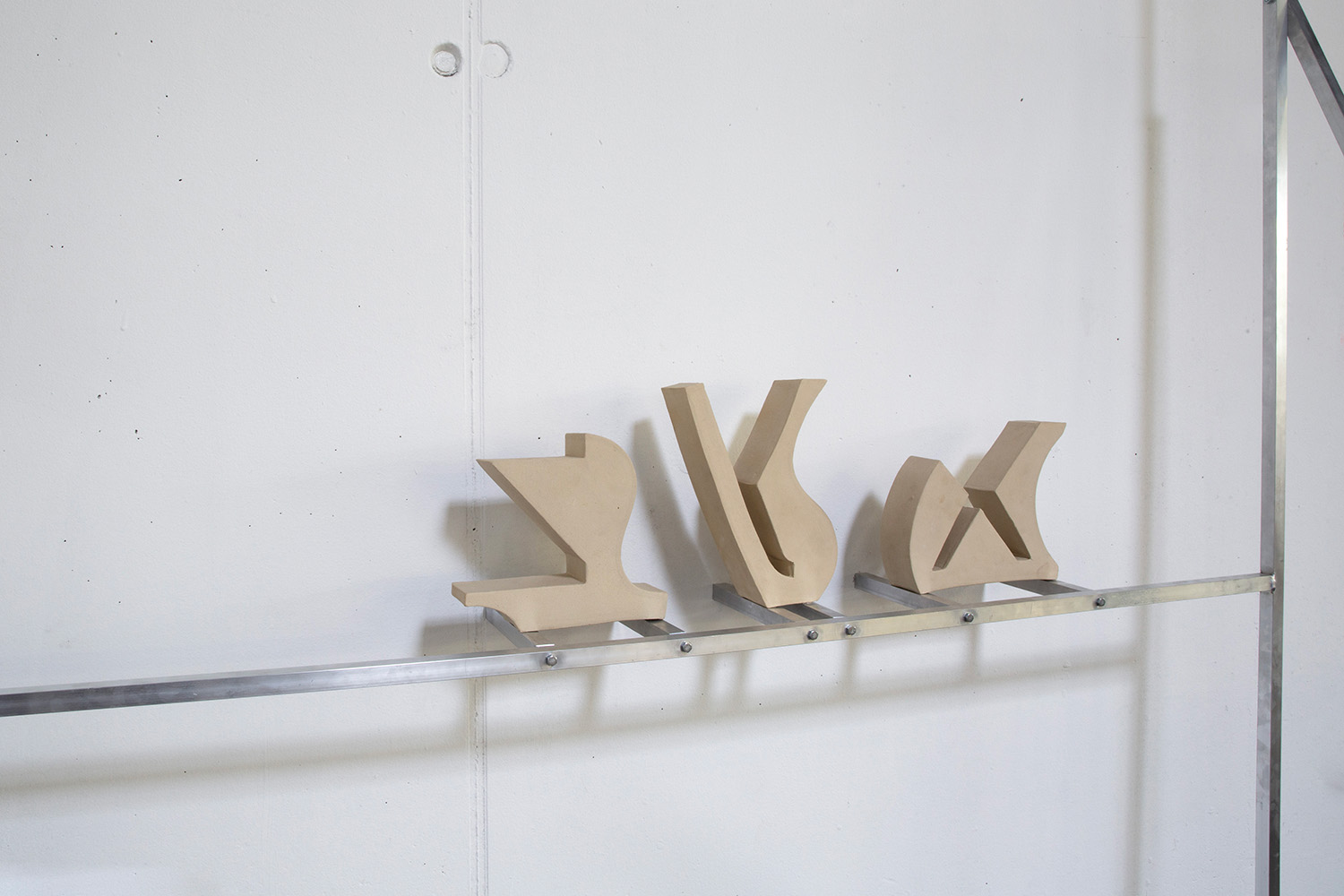
Magdalena Stückler’s zyx consists of a series of ceramic objects that function as flute
vessels. The amorphous shapes are derived from the negative spaces of the alphabet. Stückler
places the objects on supporting structures reminiscent of billboard supports, building a bridge
to postmodern architecture. The influential 1972 study “Learning from Las Vegas” examined
commercial structures in the city built from scratch: while elaborate decorations used to make
statements about a building’s purpose, ornament-free, physical lettering now dominated, while
the architecture itself remained “mute” and “empty,” as authors Denise Scott Brown, Steven
Izenour and Robert Venturi state. Stückler’s work creates a resonance space that addresses the
tension between language and construction.
Text by Juliane Bischoff
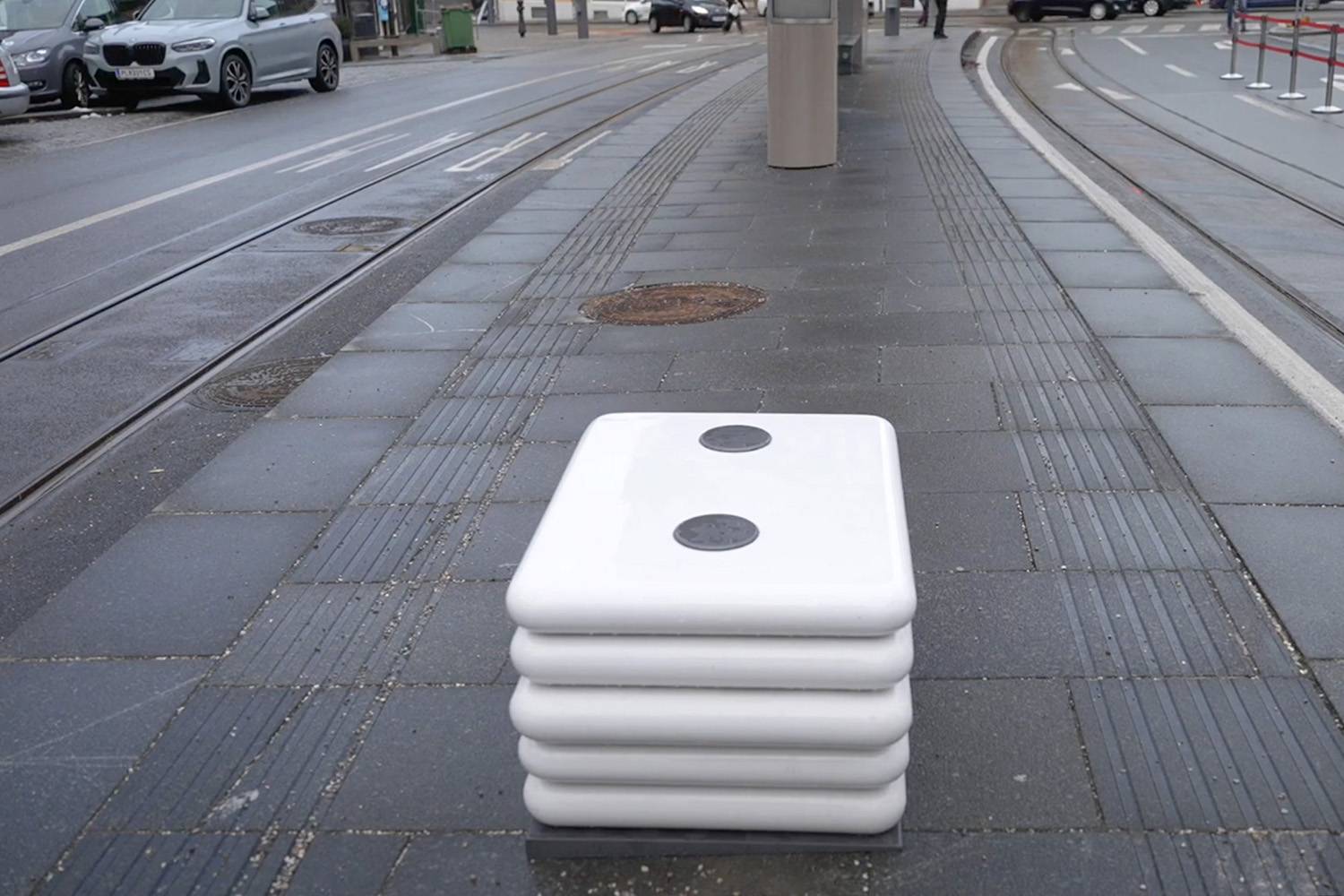
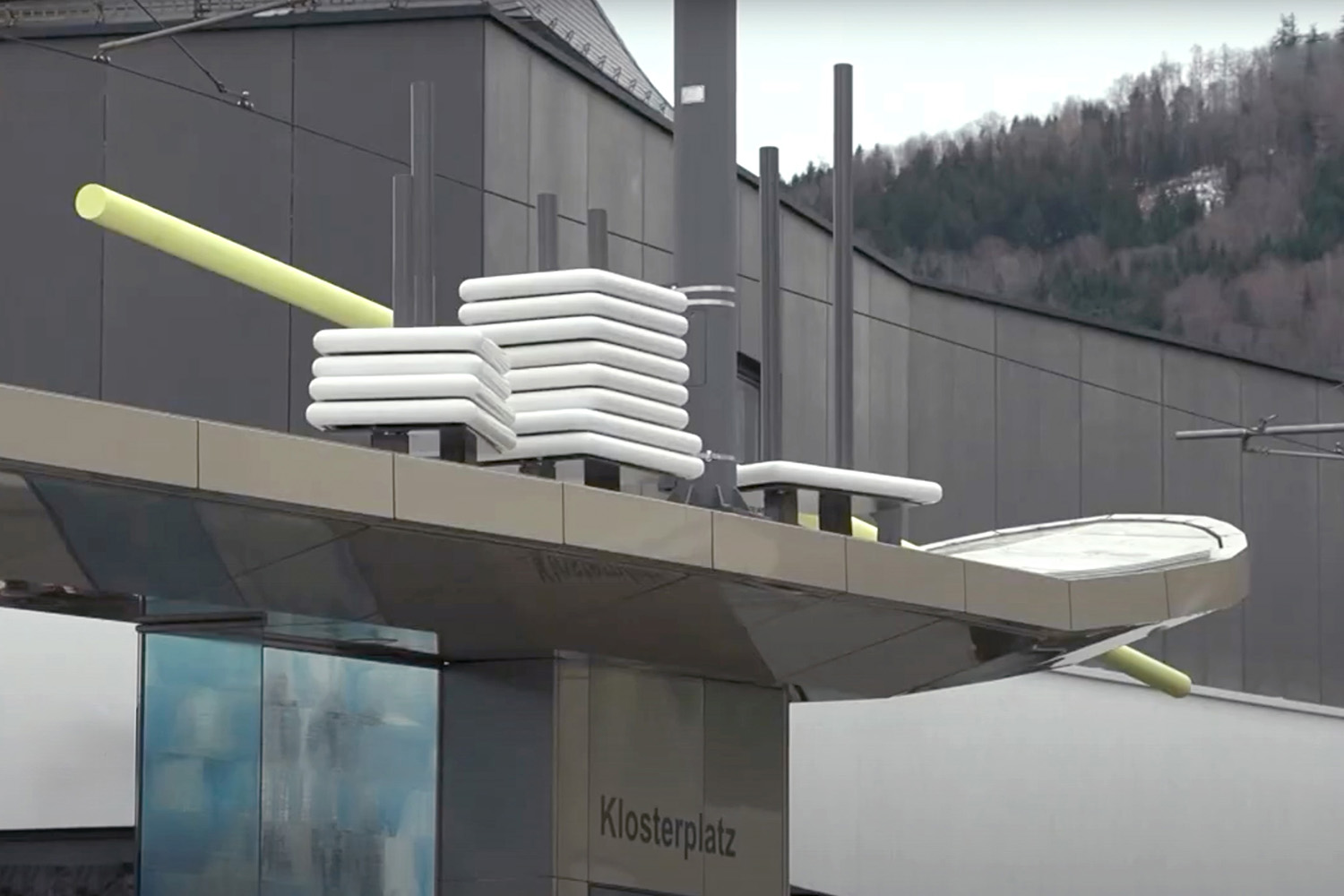
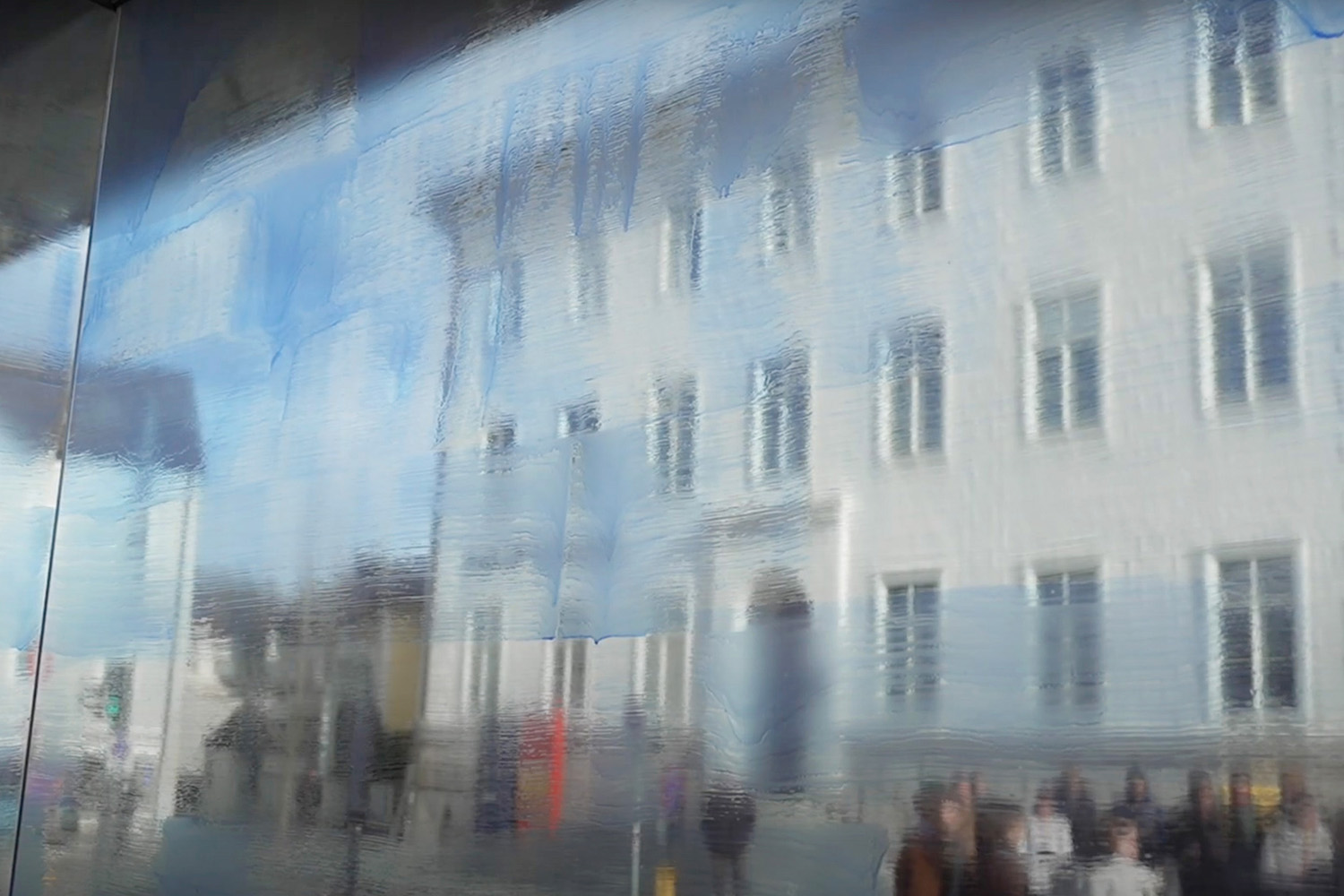
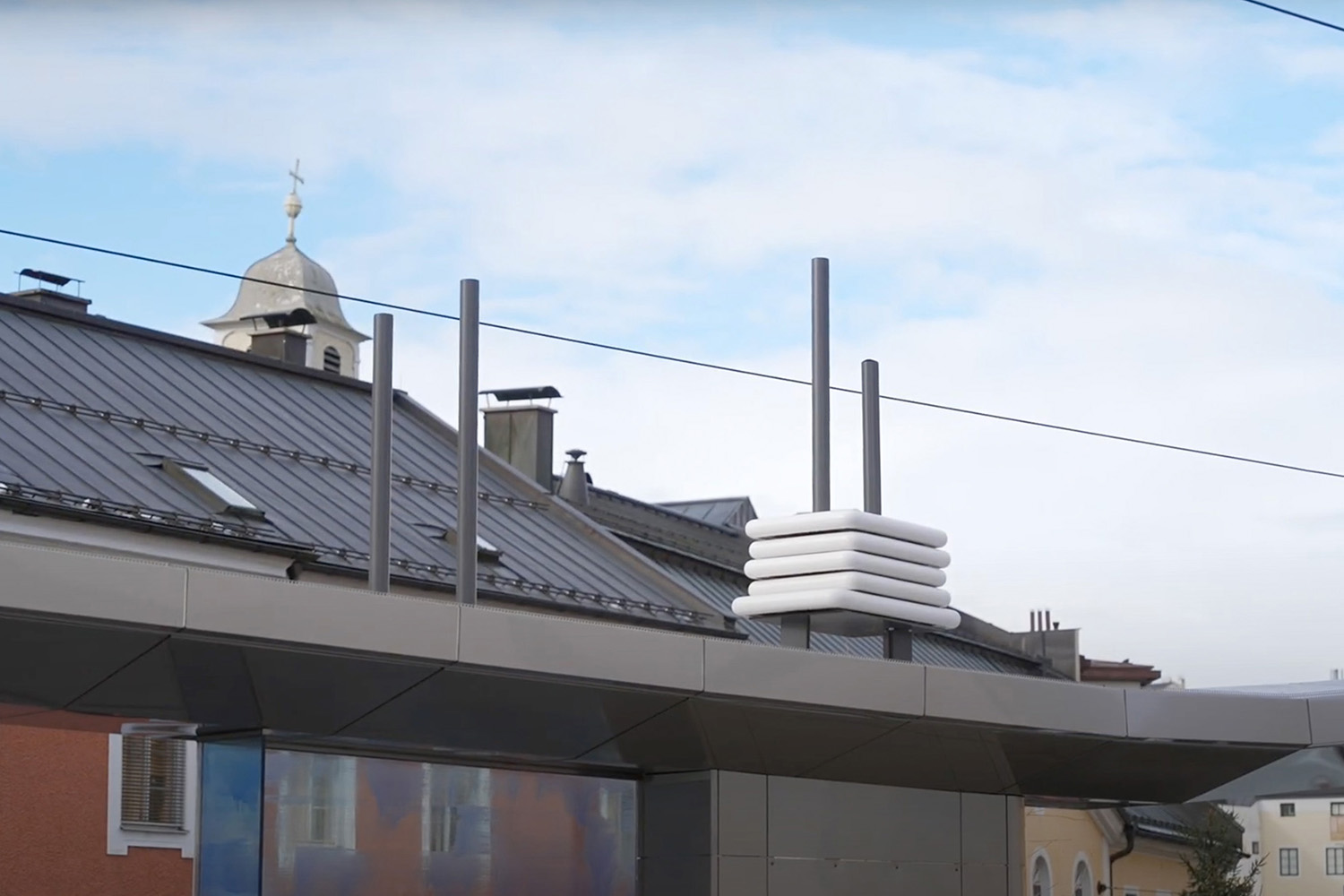
A collective work by Olga Mathilde Gärtner, Luīze Nezberte, Magdalena Stückler, Janina Weißengruber.
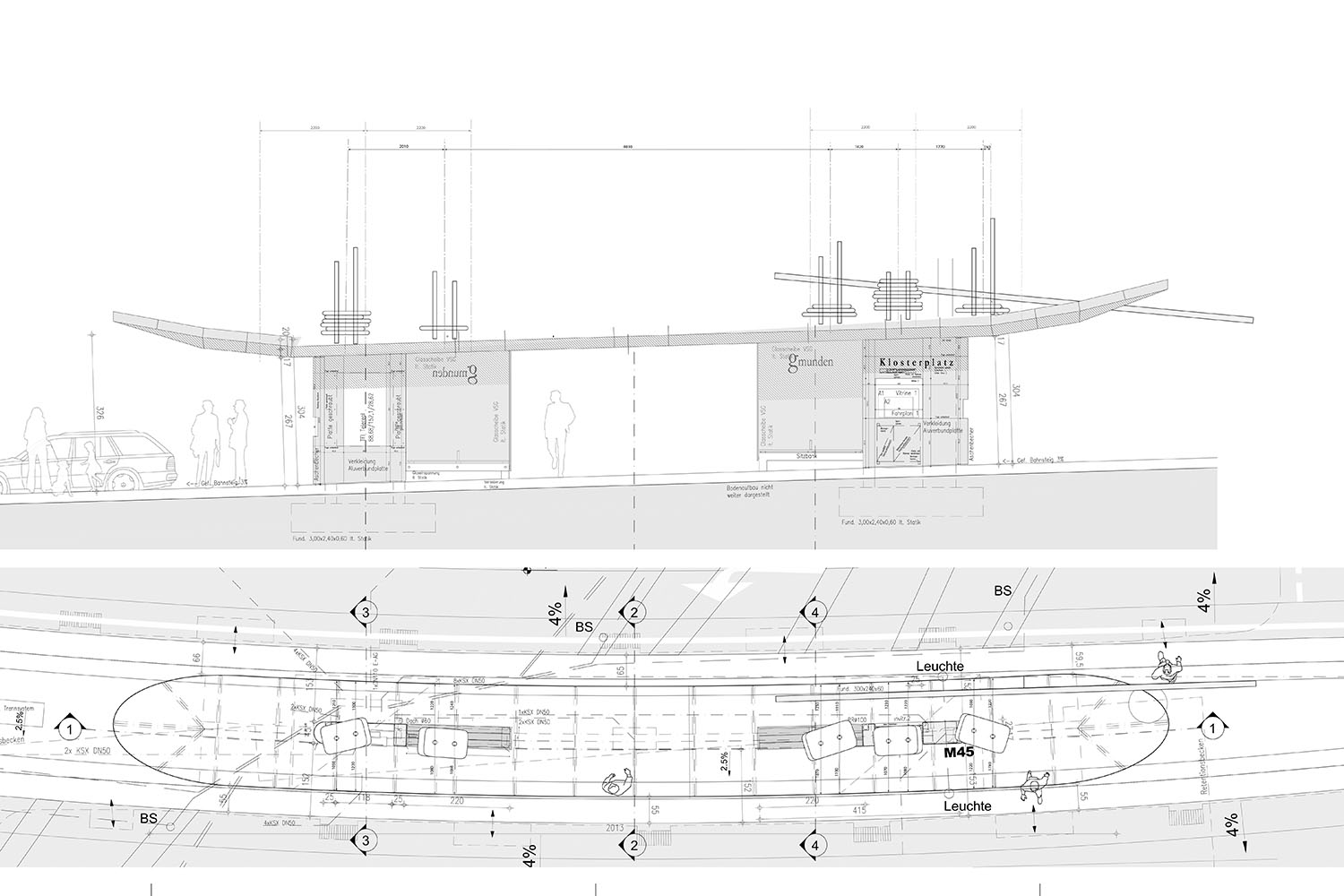
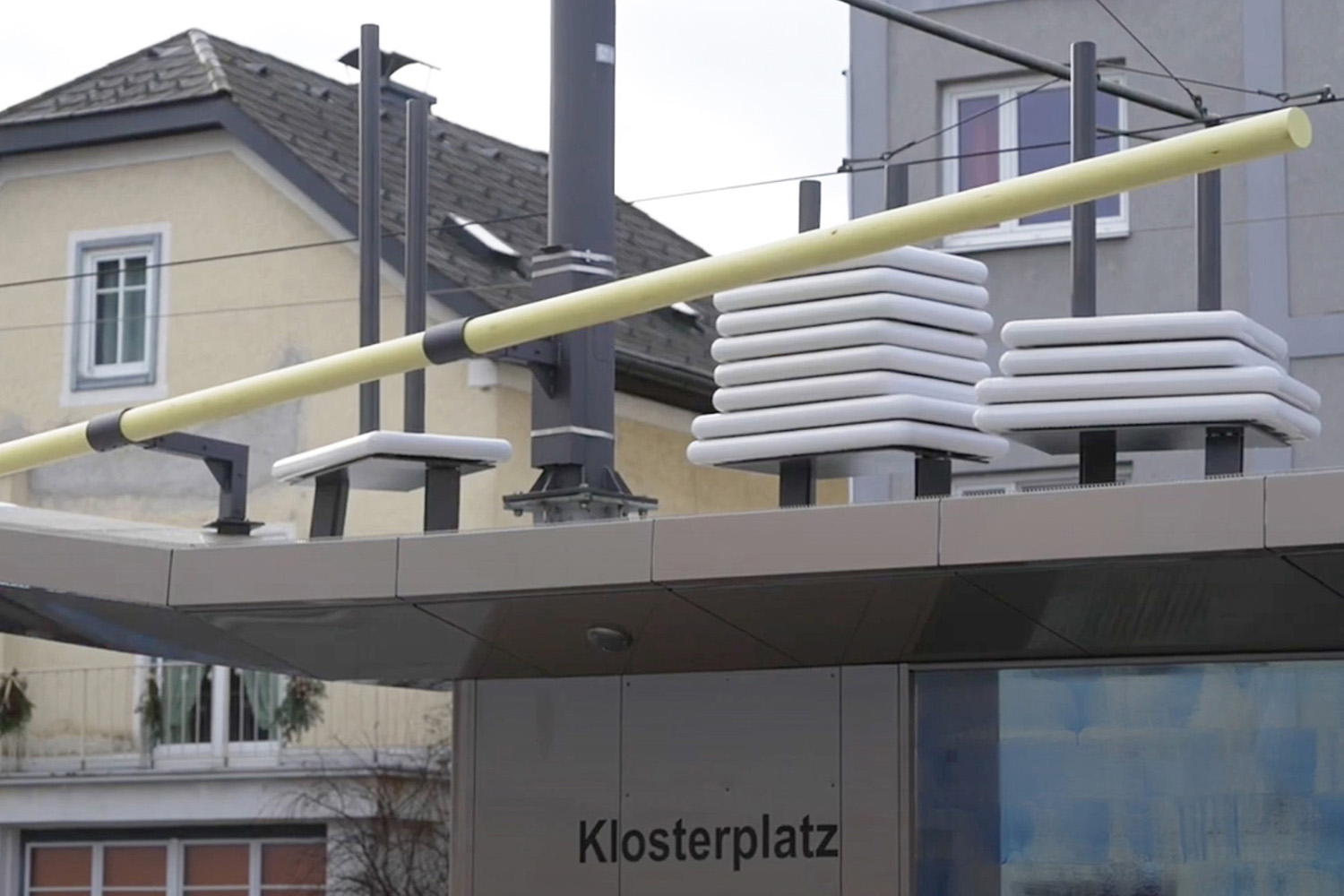
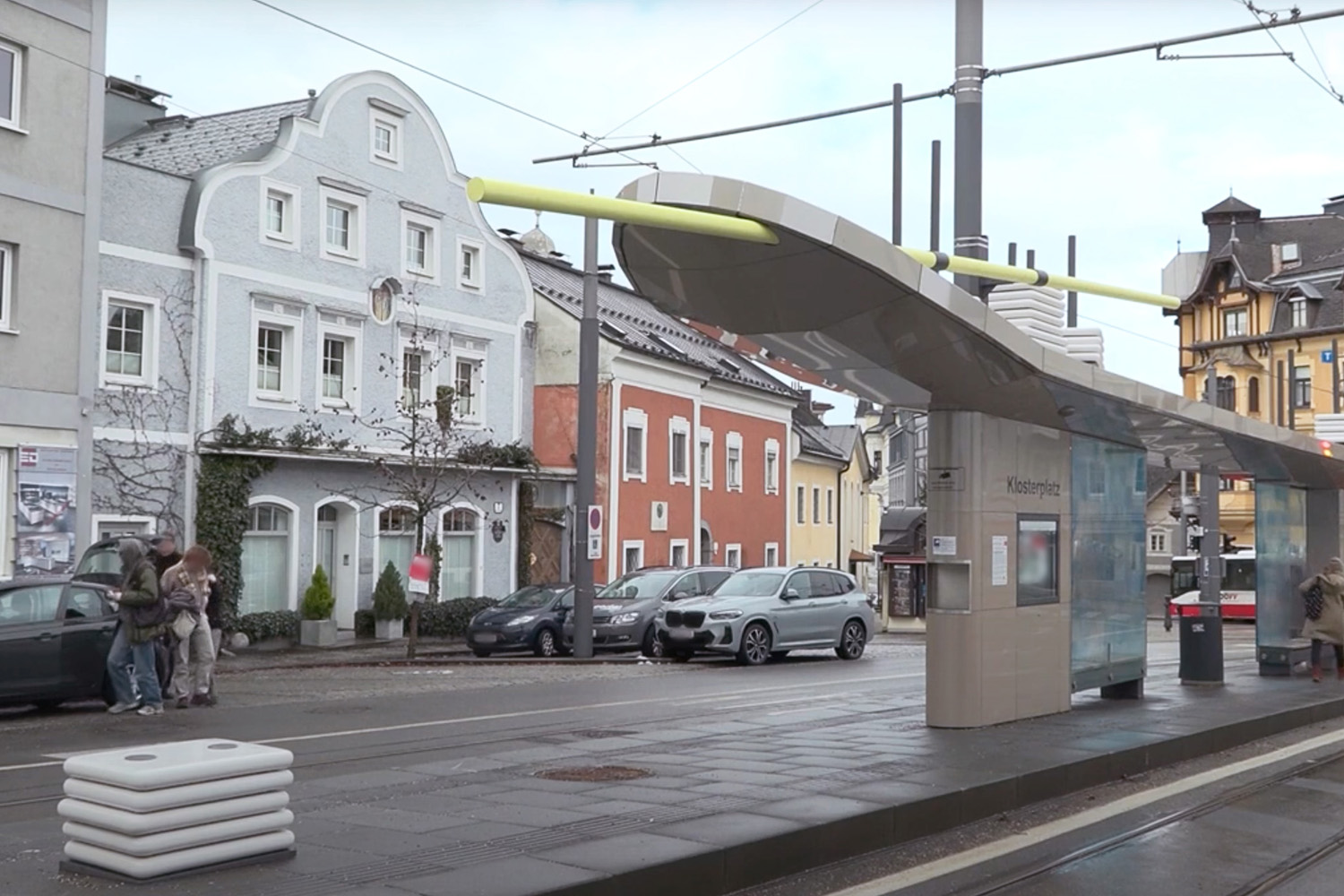
Commissioned by Stern & Hafferl as part of Salzkammergut 2024 – European Capital of Culture.
With support from LAUFEN and University of Applied Arts Vienna.
A collective exhibition by Gabriel Huth, Marlene Posch, Julian Siffert, Magdalena Stückler.
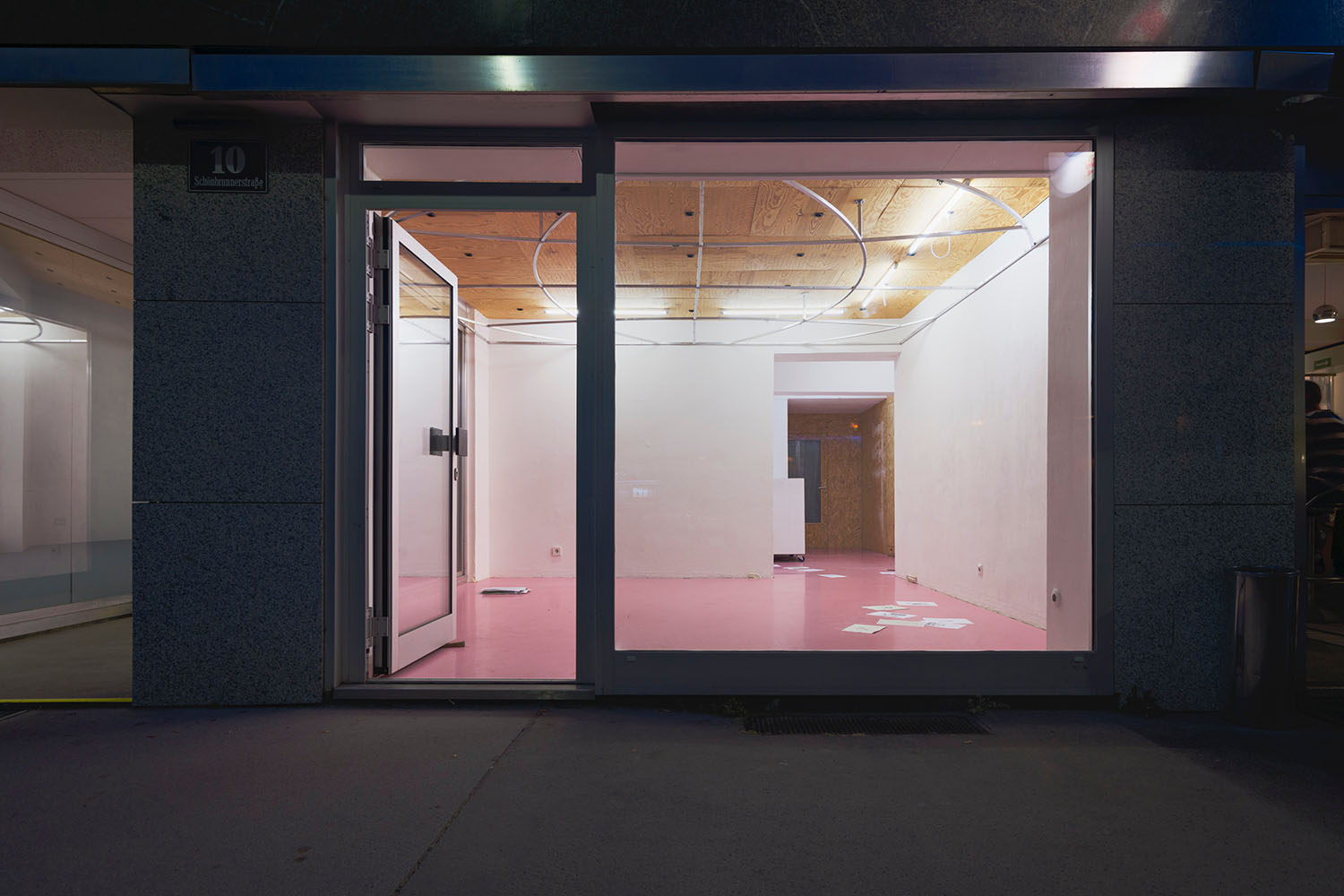
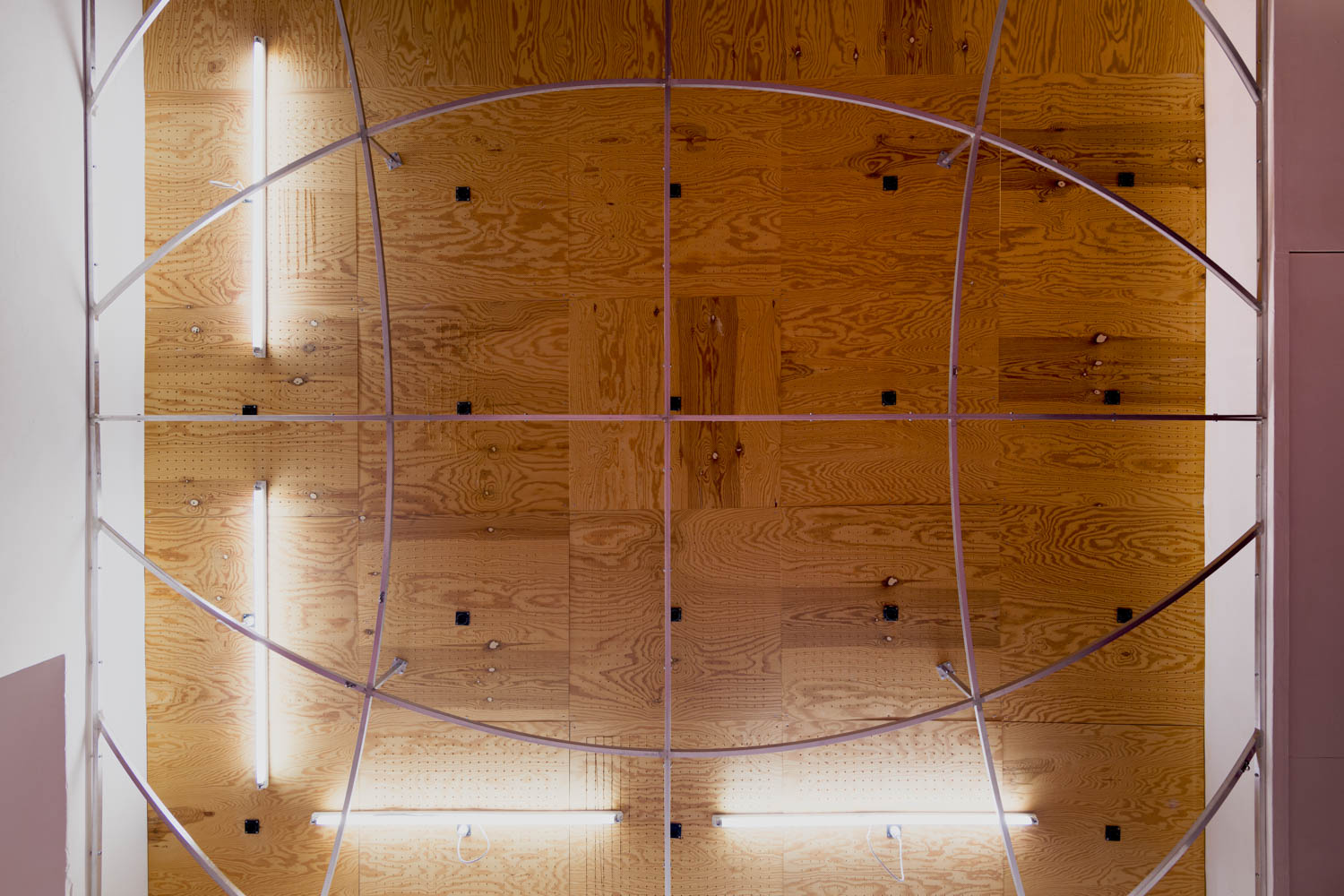
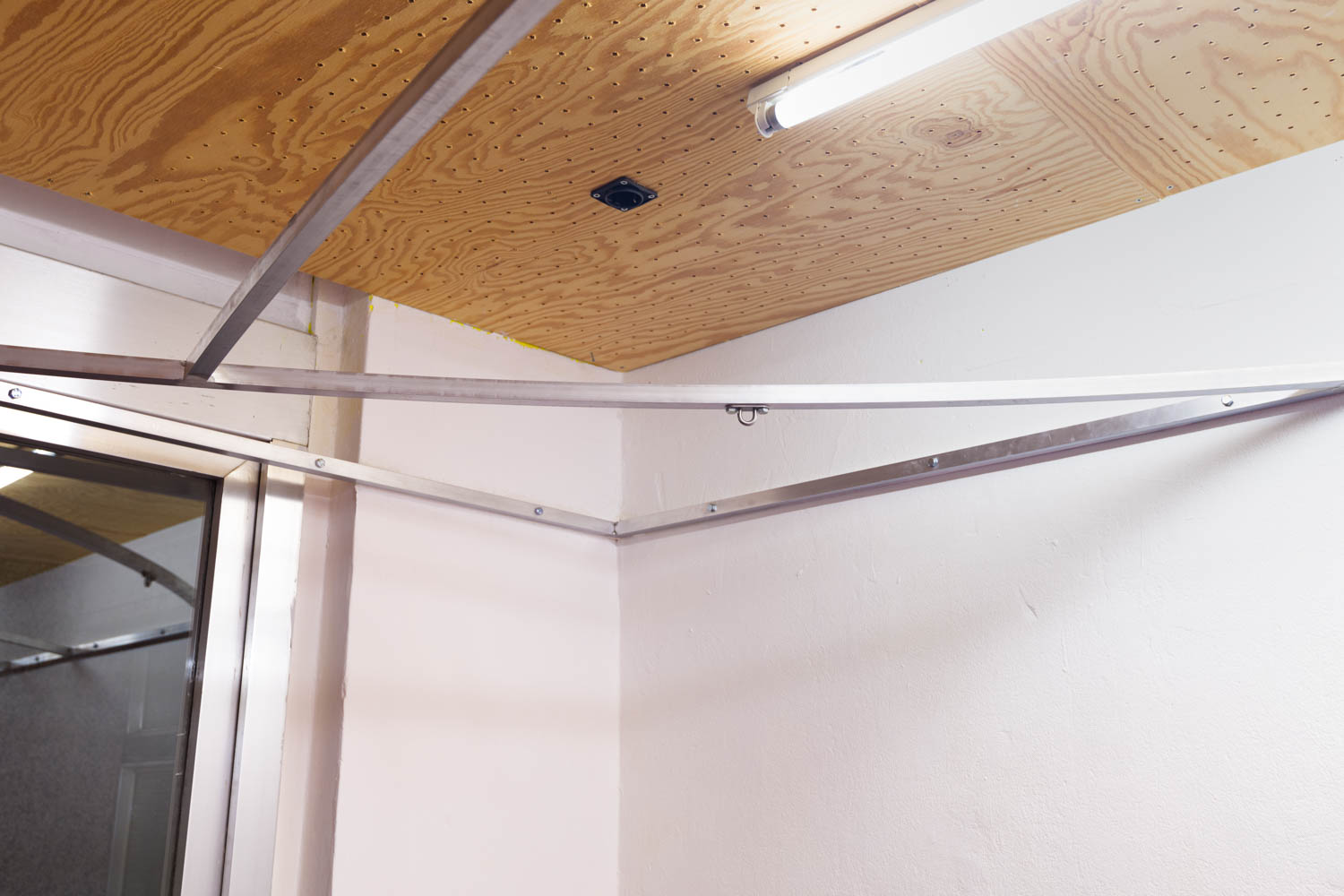
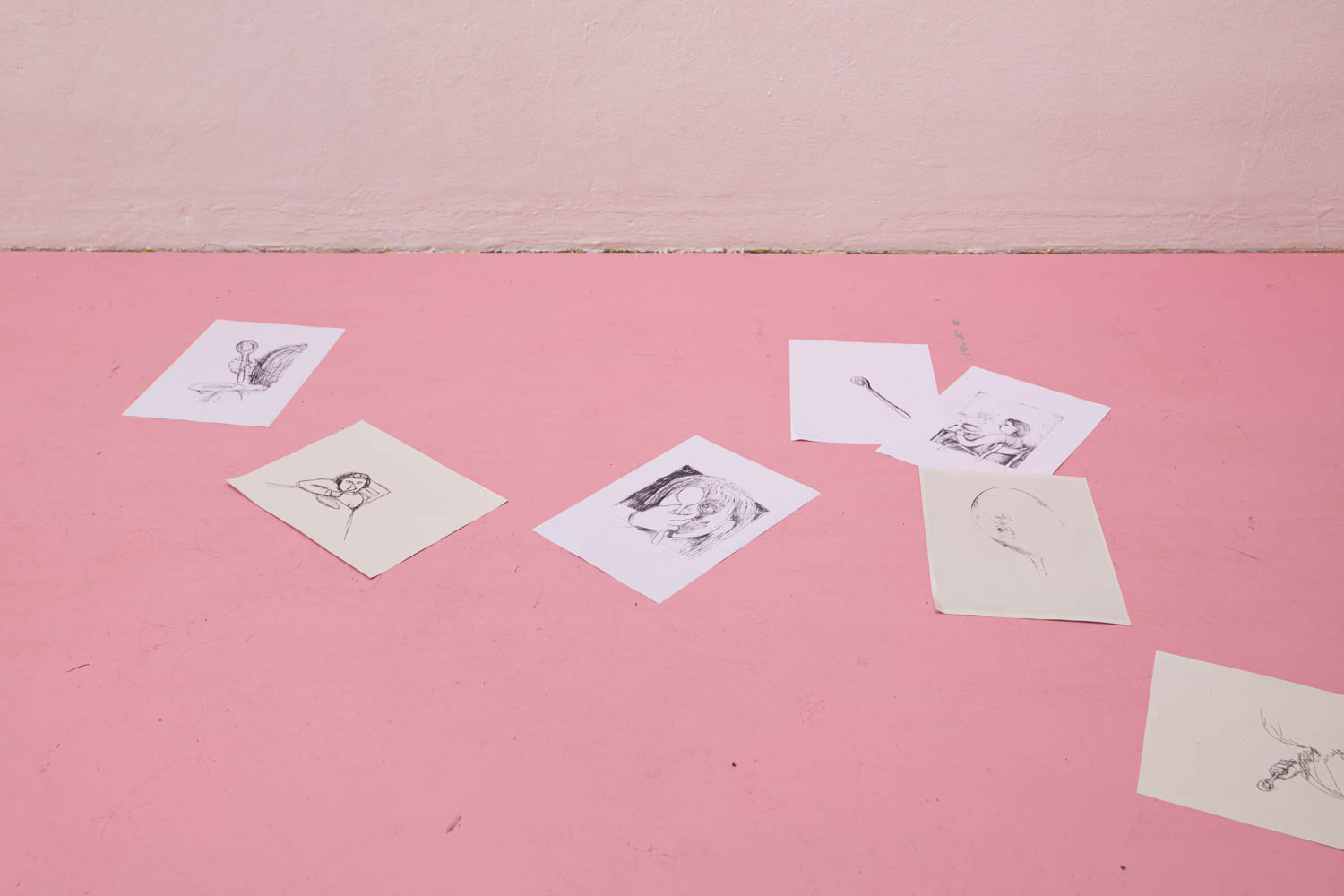
The four exhibit two collectively produced works. Carrier, an aluminum construction installed on the ceiling, flirts with ideas of infrastructure, the global and representative architecture as in the domes of the Pantheon, the Pentagon or the Reichstag in Berlin. It also seems to offer itself as a kind of display through a series of eye plates that are mounted on the suspended-ceiling-like structure. On the floor, copies of drawings are scattered around along a text by Leonie Huber. These quickly sketched out reproductions of a childhood memory of one of the artists show a kid, trying to correct its upside down reflection in a spoon.
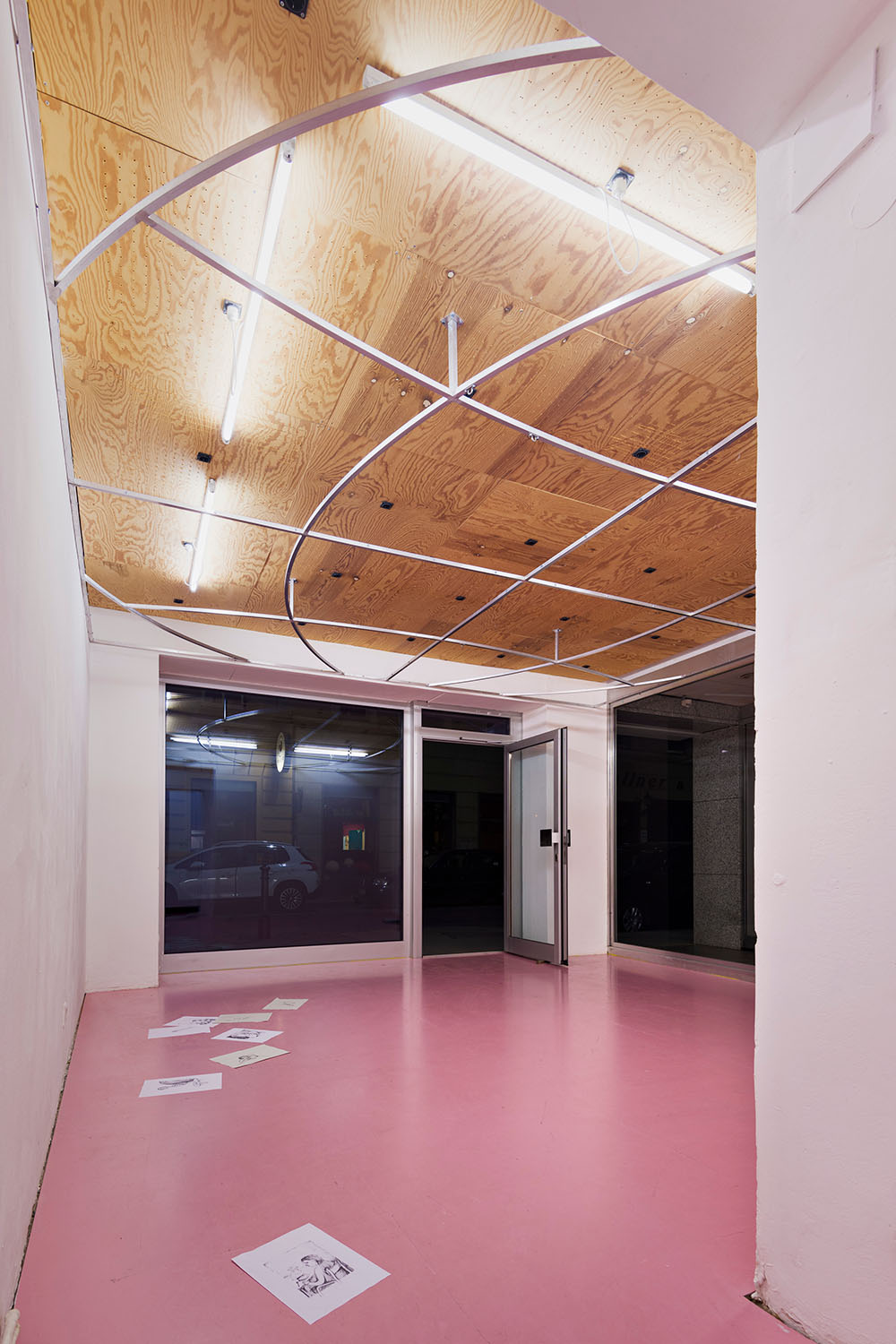
Documenation: Peter Mochi
With works by Gabriel Huth, Marlene Posch, Julian Siffert, Magdalena Stückler.